Plush toys and figures of the character as a product line
Why one toy is not enough
Plush toys and character figurines occupy 55,4% of sales in the category of licensed children's products — this is not a niche market, but the foundation of merchandising for most children's brands. But selling the first batch and maintaining demand for the second, third, and tenth release — are different tasks. If a brand releases simply "another character" instead of a thought-out expansion of the line, the buyer loses orientation: why would he want a new toy if the old one already satisfied the emotional need? The right answer is not multiplying heroes, but building a system where each new SKU logically continues the previous one and creates a reason to buy again.
How the architecture of a line is built
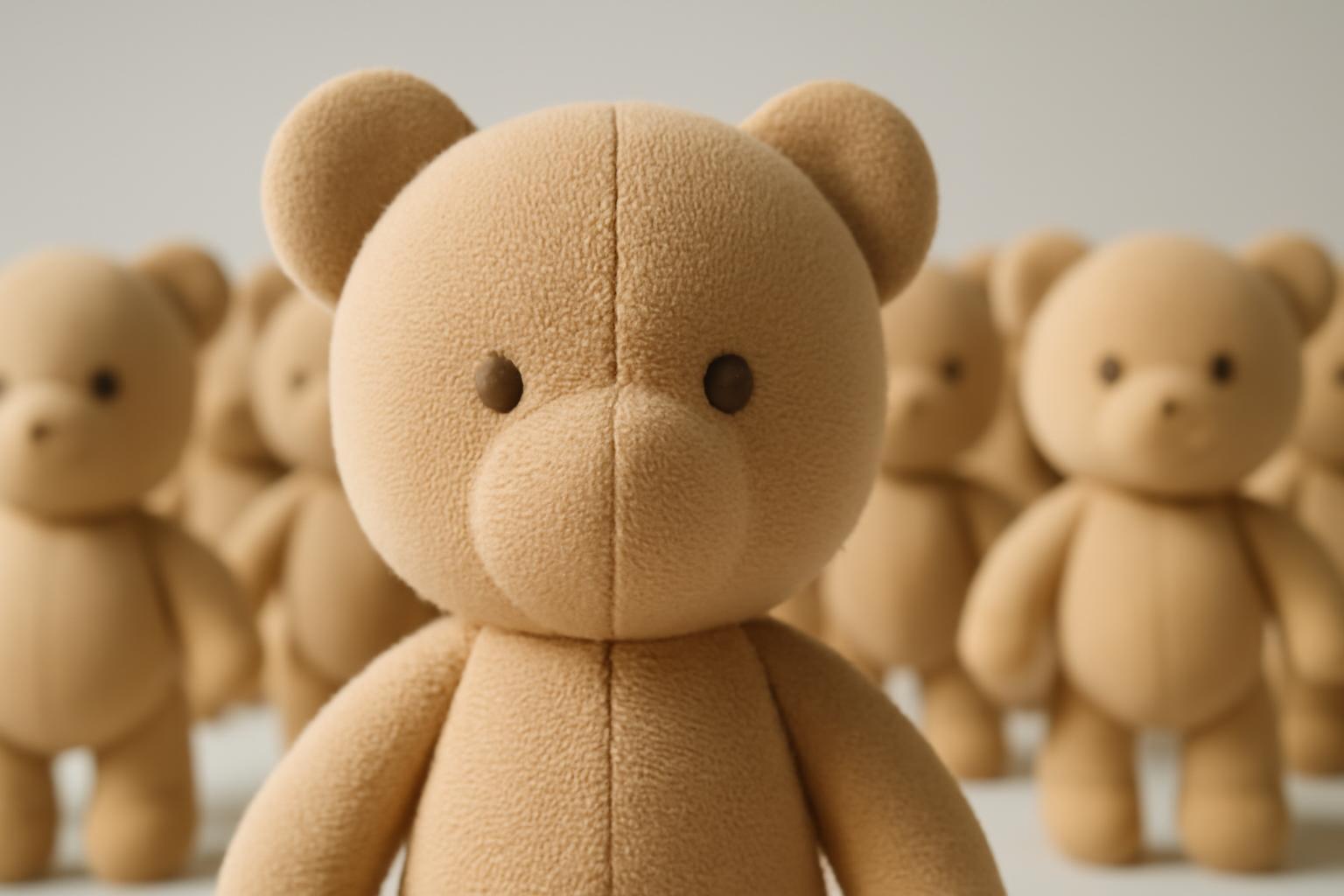
The character product line architecture is based on three variables: variations in pose or appearance, size grid and rarity hierarchy. The rule works as follows, confirmed by the example of "Am Nya Ma": the collection is built on variations of one character (family and friends) in different appearances and accessories, which creates a collection interest. The reason is simple: the buyer is already emotionally attached to a specific appearance, and the variation enhances this attachment rather than competing for attention.
Pop Mart has brought this logic to an industrial standard: a typical collection consists of 12 basic figures of one character with one or two rare or premium versions within the series. Such proportion is not a coincidence, but a calculation: 11 regular variants create a sense of accessibility and collecting excitement, while one rare figure maintains intrigue and motivates to buy the series until the complete set is assembled. It is precisely through this model that the figures form 55% of the company's total merchandising share.
- Character variations — costumes, accessories, and emotions of one character
- Size range — from keychains and mini-plushies to collector "flagships" 40+ cm
- Levels of rarity — standard version, limited, secret (hidden)
- Material variations — velboa, velour, cotton provide different feelings of "prestige" while maintaining the same shape
How the collecting mechanics drive demand
Blind box is not a packaging gimmick, but a tool that changes the logic of purchase: a person pays not for a specific toy, but for the chance to get it, and this encourages repeated purchases of the series until the desired set is assembled. FOMO marketing through limited drops amplifies the effect: miHoYo made 90% of products limited in Double 11 and received over 100 million rubles in revenue solely from character badges — without a single plush toy in that figure. This shows that the rarity mechanics works even on low-margin categories if it is correctly embedded into the release calendar.
It is important to distinguish between two effects here. Blind box creates excitement right now — this is about impulse purchase. Limited series create long-term loyalty — branded merchandise increases audience loyalty (according to studies, this indicator fluctuates from 70% to 83% depending on the source and methodology), and rare versions multiply this effect because owning a 'unattainable version' becomes part of the buyer's identity, not just owning a toy.
License or own IP: what to choose
The question of whether to create your own character or buy a license is not resolved by love for originality, but by calculating the speed of market entry and control over the product line architecture.
| Criterion | License for existing IP | Own character |
|---|---|---|
| Launch speed | High — the audience already exists | Low — need to build recognition |
| Control over the product line | Limited by contract with the rights holder | Full control over SKU and price |
| Entry cost | Royalties + minimum guarantees | Investments in character development and marketing |
| Long-term margin | Lower due to deductions | Higher with successful brand anchoring |
| Risk of obsolescence | Depends on the franchise lifecycle | Managed by the brand itself |
There is no optimal "one-size-fits-all" choice. A license makes sense when the brand values speed and an existing emotional base — that's how collaborations with gaming IPs like Genshin Impact or Honkai Star Rail work, which immediately capture the audience of teenagers and adults. An original IP is advantageous when the brand plans to build a product line for decades and is not ready to share the margin with the rights holder.
Who is the buyer: child, parent, or adult collector
The architecture and price range of the line directly depend on its target audience. The main driver of purchase for the children's audience is not the functionality of the toy or the material, but the sympathy towards the character itself: 79,9% of parents indicate that a child's attachment to the hero is the deciding factor. Thus, for a children's line, the emotional image of the character is more important than the number of variations or rarity.
Adult collectors 27–50 years old — a completely different logic. Squishmallows based on "The X-Files" are sold far beyond just children, and this is not an exception, but a growing trend: adult buyers value rarity, design and the status of ownership, not the play function. For this audience, the line is built on multi-level rarity, limited drops and premium pricing — that is, the architecture shifts from "one accessible toy" to "a system of collectible releases".
| Parameter | Child audience | Adult collectors |
|---|---|---|
| What determines the purchase | Sympathy for the character | Rarity and status |
| Pricing | Massive, accessible | Premium, up to auction markup on rare versions |
| Release frequency | Stable basic line | Frequent limited drops |
| Role of variations | Variety of images of one hero | Rarity hierarchy within the series |
Common mistakes when launching a line
The number one mistake is launching a product line without understanding production constraints. The minimum order quantity for custom plush toys is usually 100–300 units, and preparing a batch takes 2–4 weeks: if this is not accounted for in the release calendar, limited drops turn into missed deadlines and audience disappointment.
- Releasing too many new characters instead of variations of a beloved hero — dilutes the emotional connection with the audience
- Ignoring material: velvet, fleece, and cotton provide different tactile sensations and directly influence the perception of 'premiumity' of the same shape
- Lack of rarity hierarchy — without a secret or limited version, the collectible mechanics simply won't launch
- Copying the Pop Mart model without adapting it to your audience — 12 positions with one rare item work for the collectible market, but are excessive for a narrow children's line
The plush toy and figurine product line is not a byproduct of character branding, but one of the main tools for audience retention. It works when the series architecture is meaningfully connected to the emotional role of the hero, not when it's assembled from random production department decisions.
Recent articles
MegaFon, BMW, VTB and more 240+ companies. See how it looks in the showcase reel:


Our branding agency is approached to order:
Branding agency services












