Brand character in mobile games and gamification

Why a character, not just a mechanics with rewards
A reward-free mechanics works only until the user receives a bonus. Motivation then drops — the prize is spent, the reason to open the app disappears. A character changes the nature of engagement: the user does not complete a task for a discount, but cares for a being that depends on them. This is a fundamentally different psychological construct — responsibility instead of transaction.
Numbers confirm the difference in perception: 33% of Russians admit that mini-games with characters make them open the app more frequently, and 47% note a direct impact on the decision to purchase. A prize can be obtained and forgotten about the brand. A character, if it behaves authentically and evokes sympathy, is harder to forget — it occupies a place in the user's mind, not in the list of used promo codes.
A mascot on packaging and a game character — fundamentally different tasks
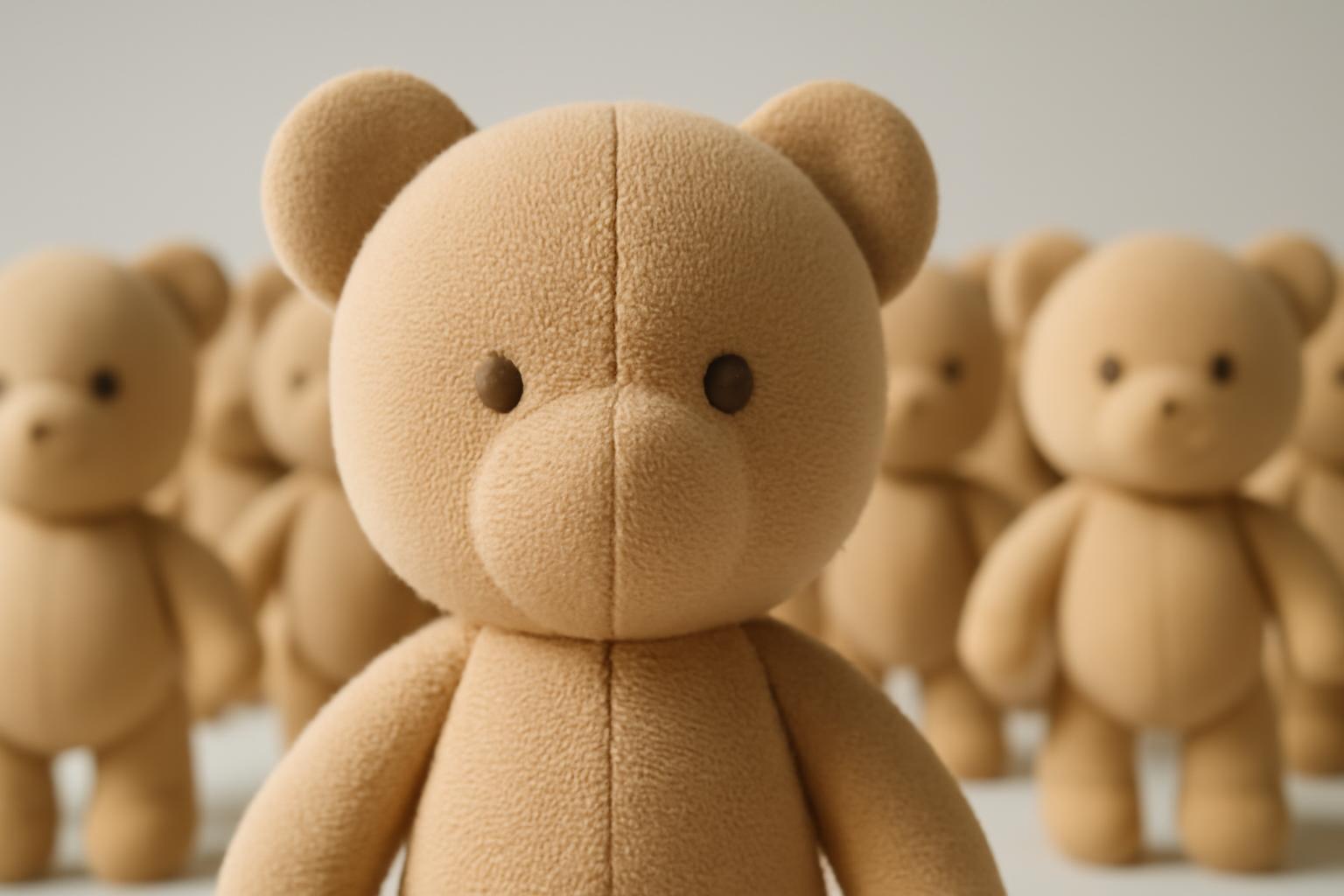
The mascot on the packaging solves the recognition task within 0,3 seconds in the store aisle. Its function is static: it must be simple, contrasting, and easily readable at a small size. A game character lives by different logic—he must withstand dozens, and sometimes hundreds, of interactions, change, react, and evoke empathy through behavior, not only through form.
It is from this that different requirements for design arise. The packaging mascot is almost always static and works as a sign. The game character must have a range of emotions, animated potential, and a 'character' that unfolds over time — otherwise, interest fades after the third session. Trying to directly transfer the mascot from the label to the game without adaptation is a common mistake: a character that works well as a static sign may become bland and unexpressive in the dynamics of the game.
Criteria for selecting a character for gamification
Choosing a character is not a creative but a research task. Working criteria are composed of several points:
- Expressiveness in motion — the character must have a repertoire of facial expressions and poses for dozens of game states, not just one static pose;
- Product congruence — a character organically linked to the product category increases brand trust significantly more than a randomly chosen image;
- Applicability to low-involvement products — where the purchase decision is made quickly and emotionally, the character works stronger than in complex B2B-categories with a long deal cycle;
- Testability with the audience before launch, not after;
- Potential for expanding the world around the character — secondary heroes, locations, plot branches extend the project's lifecycle.
Case of Pandagochi: how the choice of character decided the fate of the project
A good example of how character selection cannot be left to team intuition is the story of the 'Samokat' project. During the development phase, two candidates were tested: a raccoon and a red panda. Both met formal criteria — both are associated with care, both are cute, and both are easy to animate. However, the research showed that the panda wins in expressiveness and memorability — a critical factor for a mechanic where the character must convey emotion in every frame.
The result confirmed the correctness of the choice: the project gathered 1 million participants, 70% of whom completed at least one task, and the total screen time in the mini-game exceeded 50 years of user time across 2,5 million sessions. Participants showed an increase in order frequency and average order value due to interaction with the mechanic. The difference between the raccoon and the panda on paper seems minor — in practice, it determined whether the project would take off.
Gamification formats: patterns of choice
Three main formats — runner, tamagotchi, and collection — operate on different psychological logics and are not equally suitable for every brand.
| Format | Psychological mechanism | When beneficial |
|---|---|---|
| Tamagotchi | Care, responsibility for the creature, fear of 'losing' the character | Products with frequent repeated interaction: delivery, retail, fintech |
| Runner / arcade | Competition, short dopamine dose, quick results | Promotion of a specific campaign, one-time spike in engagement |
| Collection | Excitement of accumulation, sense of progress and incompleteness | Loyalty programs, long purchase cycle, seasonal campaigns |
Demonstrative output from Sela’s practice — the concept of a whole world around the character works more steadily than a single isolated game: the SELA-land project attracted 70 thousand players and increased average order value by 31% precisely because the character existed not in one mechanic, but in an entire environment with locations and a storyline. A similar logic is seen in Żabka: the character Froggu converted one-third of 7,5 million app users, increased purchase frequency by 32% and ARPU by 24%, with half of the players being under 24 years old, which confirms: the tamagotchi mechanic is especially strong among younger audiences.
Psychology of attachment: why tamagotchi reduces churn
Tamagotchi mechanics outperform other formats in user retention for a reason. It embeds into brand relationships an element that is absent in runners and collections—commitment. A character that requires regular 'feeding' or attention creates a sense of responsibility, and interrupting this care is perceived as a small loss, not just a missed notification.
It is exactly this mechanism that explains the difference from ordinary push reminders: a notification like 'come back and get a discount' is easily ignored, whereas the thought 'my character is hungry' touches emotions. According to a study by Anketolog.ru, 81% of users are ready to recommend a liked mini-game to friends if additional bonuses are provided—this shows the potential for social spread of game mechanics when incentives are present.
Typical mistakes when implementing a character in gamification
Failed examples are rarely analyzed publicly, but patterns are visible even without specific anti-hero cases
- The character is chosen according to the team's taste, not based on testing results with the target audience — there is a risk of getting a 'neutral' hero without emotional charge;
- The mechanics are launched without character development over time — interest fades after a few sessions if the hero does not change or react;
- The character is isolated from the rest of the brand world — it is only used in the game, not appearing in communications, packaging, or social networks, which prevents the effect from transferring to the overall brand perception;
- The format is chosen without considering the frequency of product purchases — tamagotchis are launched where brand interaction is objectively rare, and the care mechanics do not have time to take effect;
- Character congruency with the product is ignored — a cute but random hero reduces trust instead of increasing it.
A character in gamification justifies itself when it is chosen through research, embedded into a recognizable brand world, and the format is selected to match the real frequency of contact with the product. Without these three conditions, even a well-drawn hero risks remaining a beautiful but useless icon in the app.
Recent articles






MegaFon, BMW, VTB and more 240+ companies. See how it looks in the showcase reel:


Our branding agency is approached to order:
Branding agency services












