Ethical limitations of characters in children's products

The client sends a brief: a 'friendly animal' is needed for a line of children's cereals with high sugar content that 'will grab children in the store and please moms.' Right here lies a conflict — what visually attracts a child often directly contradicts the requirements that legislation and common sense impose on the product. Developing a character for a children's audience is not a creative task, but work at the intersection of law, ethics, and perception psychology, where an error at the start leads to the product being removed from shelves, as happened with the 'Skeletones' yogurt.
Why a character works stronger than packaging color or font
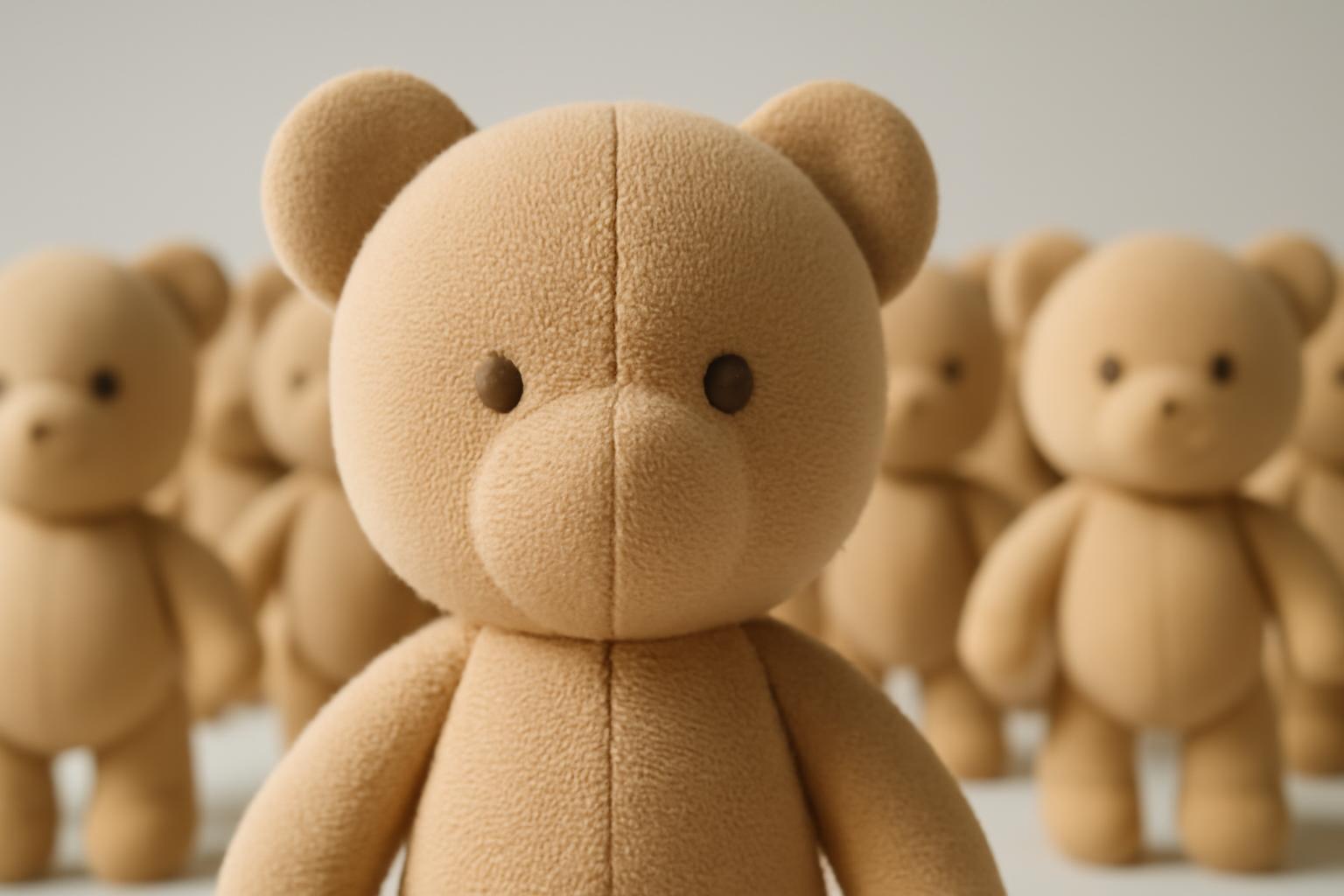
A child aged 4-7 years perceives a character not as a design element, but as a separate being with its own motivations and personality. An investigation by Saint Petersburg State University using eye-tracking confirmed that a fairy-tale character on a dairy product package holds the gaze of children aged 5-6 years significantly longer and more purposefully than a logo, color, or font. At this age, a child does not distinguish advertising intent and simply trusts the 'hero'—if the character is friendly, the product must be good. An adult sees a marketing trick, a child sees a friend.
It is precisely this difference in perception that explains why regulators around the world do not restrict advertising of children's products in general, but specifically limit the use of characters—as the most powerful tool for influencing decisions, bypassing rational product evaluation.
How characters are regulated in different countries: a comparison of approaches
Countries have chosen different strategies — from targeted bans to voluntary industry commitments. The difference is fundamental for those who work with international brands.
| Country/region | Mechanism | What is specifically banned |
|---|---|---|
| Chile | Law «Ley de Etiquetado» (2016) | Licensed characters in marketing of products high in salt, sugar, fats — regardless of audience age |
| United Kingdom | CAP Code (2017) | Licensed characters and celebrities in advertising of HFSS products for preschoolers and schoolchildren; company's own brand characters — permitted |
| EU (voluntarily) | EU Pledge (2017) | Signatory companies have abandoned licensed media characters in marketing of unhealthy food to children up to 12 years old |
| Russia | Federal Law «On Advertising», article 20 | Undermining parental authority, creating a complex of inferiority without the product, minimizing skills, showing children in dangerous situations |
Chile went the furthest: Nestlé, Kellogg's and Masterfoods received fines for non-compliance with the law in the first year of its implementation. The United Kingdom and the EU Pledge chose a softer model — the ban applies not to characters in general, but specifically to foreign licensed heroes in combination with unhealthy nutrition. A company's own brand character remains a legal tool even for less healthy products, provided other requirements are met.
What Russian legislation specifically says
Article 20 of the Federal Law «On Advertising» does not name characters directly, but effectively regulates the methods most often implemented through them. Forbidden:
- forming in a child a feeling of inferiority due to the absence of the product with him or his family;
- undermining the authority of parents and teachers by implying that adults do not understand the product as well as the character does;
- downplaying the age-related skills required for using the product — that is, showing that even a very young child could handle the product, when this is not the case;
- depicting children in dangerous situations, including situations provoked by the character himself.
There is no separate law on characters in the Russian Federation, and the WHO criteria published in 2023 year, which determine whether a product can be subject to children's advertising using heroes, are not directly enshrined in Russian law. This creates a gray zone in which many brands continue to use characters for products that in Chile or Great Britain would fall under a ban.
Case of the 'Skeletons': where does the boundary of attractiveness and acceptability lie
Danone launched a line of yogurts with skeleton characters — the aim was to target the teenage audience, which likes gothic aesthetics and mild horror. There were no legal objections to the product: no undermining of parental authority, no demonstration of dangerous situations. However, the product was removed from production in Russia after a wave of complaints from parents about the intimidating appearance of the characters and the dissonance between the image and the declared 'benefits' of the yogurt.
This case shows the main point: law and public acceptability are not the same. A character may pass all formal filters of the Federal Law 'On Advertising' and still fail if it contradicts parents' expectations of what a hero of a children's product should be. Studies confirm this demand: 70% of Russian parents believe that a character of a toy or product must convey specific values — kindness, honesty, fairness — and 46% consider Soviet characters and heroes of folk tales most appropriate to the values they want to see in toys; half of parents would prefer toys with these characters rather than abstract 'trendy' mascots.
Matrix: forbidden, allowed, recommended
For practical work, it is more convenient to evaluate a character not by one criterion, but immediately by three: audience age, product category, and character origin.
| Situation | Status | Comment |
|---|---|---|
| Licensed hero in advertising of HFSS-product for children up to 12 years old | Forbidden (UK, EU Pledge, Chile) | Not formally forbidden in Russia, but reputationally risky |
| Own brand character in advertising of HFSS-product | Allowed (UK), under question by WHO criteria | Legal, but ethically questionable without changing the product composition |
| Character showing a child in a dangerous situation | Forbidden (RU, art. 20 of Federal Law «On Advertising») | Direct violation regardless of product category |
| Character conveying a threatening or ambiguous image on a children's product | Not legally prohibited, but not recommended | The 'Skeletons' case — a reputational failure despite formal legality |
| Character with explicit value characteristics (kindness, honesty) | Recommended | Matches 70% of parents' expectations, reducing the risk of refusal at the purchase stage |
How to distinguish a conscientious character from a manipulative one
There is no unambiguous legal test, but there are working questions that resolve most disputed cases already at the briefing stage:
- Does the character sell product properties or sell himself as a standalone 'friend', regardless of what is inside the packaging?
- If the character is removed — will the product still have a reason to be purchased, aside from a child's emotional attachment?
- Does the character's image correspond to the actual composition and benefit of the product, or does it create an impression of 'usefulness' that does not exist?
- Can a parent, looking at the character, calmly explain the logic of the purchase to a child — or will they have to justify it?
- Does the brand use a licensed hero from another brand for a product category where WHO criteria require advertising to children to be limited?
If at least two of these questions raise concern — the character exploits children's trust rather than fulfilling a brand communication function. Developing a children's mascot requires not a creative brief like 'make it funny', but a legal and ethical audit at the outset — this is cheaper than redesigning a campaign after complaints from parents or a regulator's fine.
Recent articles







MegaFon, BMW, VTB and more 240+ companies. See how it looks in the showcase reel:


Our branding agency is approached to order:
Branding agency services












