Animatronics and grow dolls as a character embodiment
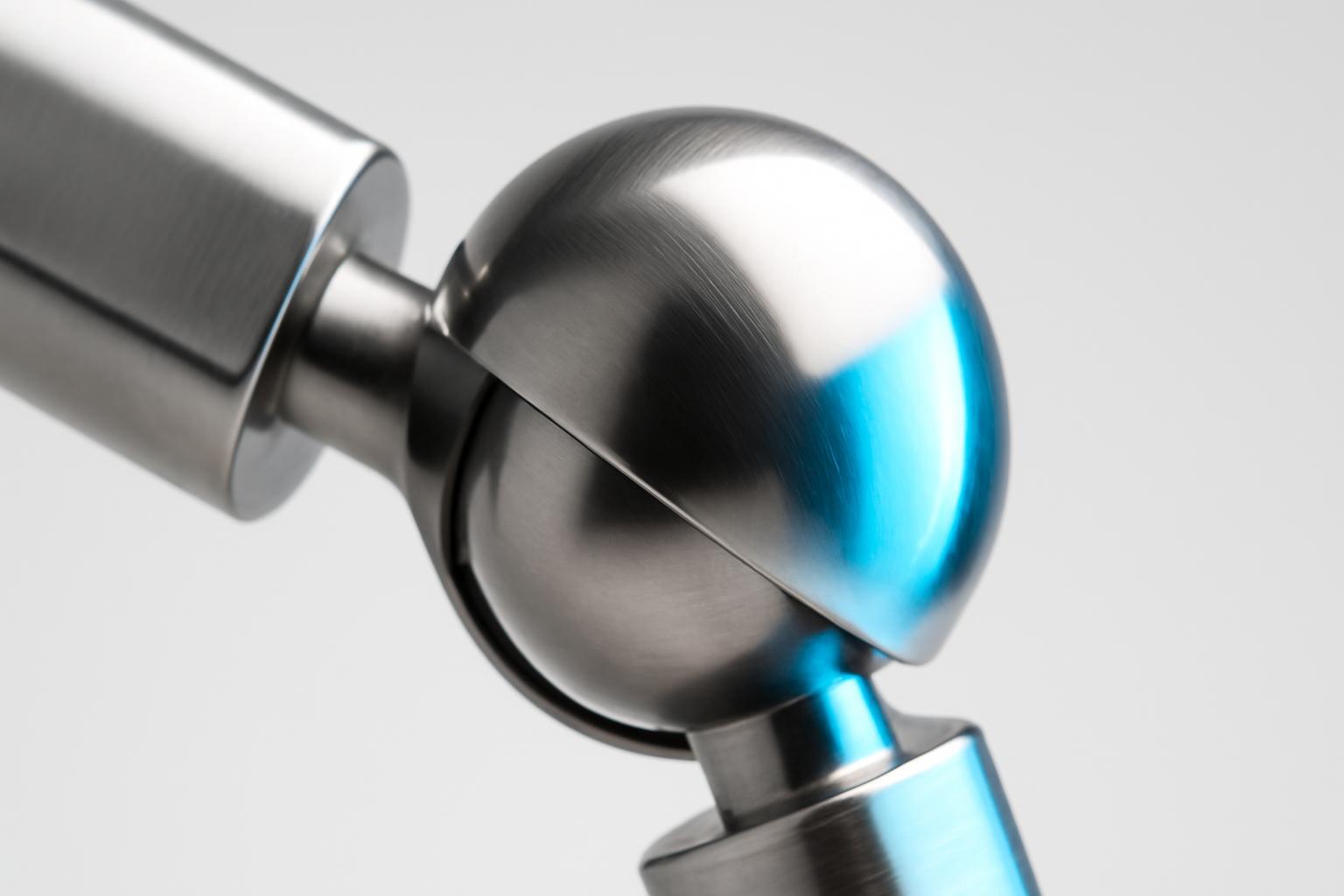
What the mechanics of facial expressions consist of
Inside the mascot's head with animatronics, there are from 3 to 8 servos — each is attached to a separate expressive node. Control is done via a radio channel 2,4 GHz from a remote control or through a joystick built into the actor's glove. The battery lasts from 2 to 4 hours depending on the number of moving elements and usage intensity.
- Eyelids and eyeballs — blinking and slight eye movement, the most frequent and cheapest node;
- Jaw — mouth opening synchronized with the actor's phrase or a pre-recorded sound;
- Ears — rotation of 15–30 degrees, reaction to touch or voice command;
- Tail or wings — oscillating movement, adds liveliness to the body without changing posture.
Each additional node is a separate servo, a separate cable, and extra weight in the costume head. Therefore, manufacturers rarely install all four mechanisms at once: they usually choose a combination of 'eyes plus mouth' as the minimal set that provides the maximum visual effect at a reasonable price.
Who pulls the strings: the actor's glove or the operator's remote control
Choosing a control mode is not a matter of taste, but a matter of contact scenario with the audience.
| Parameter | Joystick in the actor's glove | External operator's control panel |
|---|---|---|
| Synchronization with the event | The actor reacts to the guest instantly, without delay | Reaction delay 1–2 seconds, the operator sees the overall picture, not the details |
| Load on the actor | High — one has to simultaneously follow the body plasticity and facial expressions | Low — the actor only practices movement |
| Where it is applied | Photo zones, promotional points, children's celebrations with direct contact | Stage acts with a scripted scenario |
| Typical mistake | Random triggering upon a sharp hand gesture | The facial expression initiates later than the real event and looks unnatural |
For a branded character who works in a crowd and must 'come alive' precisely at the moment of a photo with a guest, a glove almost always wins — the response is more important than the smoothness of movement. A remote control makes sense only where the mimicry is built into a pre-defined number, for example, in a theatrical exit at a corporate event.
How much does a living face cost: price breakdown
A basic growing doll without animatronics costs 3500–5000 dollars — the amount covers modeling, design and materials when the three mandatory criteria are met: functionality, appearance and safety of the actor inside. Animatronics adds 1000–3000 dollars on top, and the final price of a costume with a living mimicry reaches 4500–8000 dollars and above.
The spread is determined by the number of nodes, not 'complexity' in a general sense:
- Blinking eyes — minimal surcharge, approximately 300–500 dollars per node with wiring and calibration;
- Opening the mouth synchronized with speech — 500–1000 dollars, requires a separate microphone or a pre-recorded track;
- Moving ears or tail — 300–700 dollars per node, the price increases when adding a touch sensor;
- Full set (eyes, mouth, ears, tail) in a combination of manual and automatic modes — the upper limit of the range, 2500–3000 dollars on top of the basic doll.
Limitations that are not mentioned in advertising brochures
The head with animatronics is made significantly larger than standard — otherwise the motors, wiring, and radio signal receiver physically won't fit under the fabric. Due to the increased volume, the built-in protective helmet, which in a regular mascot cushions impacts inside the head, is often removed. This is a direct risk for the actor during an accidental collision with a guest, stand, or door frame on the set.
The second limitation is the duration of continuous operation, and it is stricter than it appears at the planning stage. The recommended mode for a costume with animatronics is 10–15 minutes, after which a break is needed. The reason is not only the weight of the mechanics on the actor's neck and shoulders, but also the heating of the electronics: in summer, components inside the head overheat significantly faster on an open area than in a room with air conditioning. If a brand plans a four-hour promo, at least two or three actors per shift are needed — the calculation of 'one hero for the whole day' simply will not work physically.
When does the mechanics pay off, and when is it just an unnecessary expense
The question of efficiency is not about the size of the brand's budget, but about the format of contact with the audience.
| Animatronics is justified | Animatronics is excessive |
|---|---|
| A long-term mascot that appears regularly and works on recognizability (a team mascot, a brand hero of a network) | A one-time event for one day without repeated contacts with the same audience |
| A photo zone and close contact with children — mimicry holds attention longer than a static pose | Filming a video where mimicry is cheaper and easier to add in CGI during post-production |
| The brand is building a long story of the character: social media, merchandise, animated videos | The character is only needed for logo recognition from a distance, without close contact with people |
| High competition for attention — an exhibition, festival with dozens of booths nearby | A local event with a limited budget and a short cycle of doll usage |
Company Maskot, which worked with the Olympic Committee of Russia, M&Ms, and KFC, places animatronics precisely where the character goes beyond the limits of a single event. Their own mascot Zelik, a cheerful dinosaur, was created with a targeted objective — to prove that the culture of growth characters in Russia can work at the level of Western studios, rather than remaining a one-time attribute of children's celebrations.
What facial expressions mean for brand identity
A static doll remains a costume, even if the design perfectly matches the logo and brand colors. A mechanism that blinks in response to a child's movement or turns its ear toward laughter is perceived by the brain as an intention—"she noticed me." This effect works not as a beautiful detail, but as a communication channel: the brand conveys the character's personality without a single spoken word.
The difference is noticeable in recognition rates measured months after the event. A character with facial expressions is discussed in social media, people look for it at the next event, and ask organizers "will that dinosaur come again?" A doll without movement doesn't raise such questions—it was just at the party. For brands with a long cycle of audience contact, this is the difference between a one-time presence and building a separate media unit that lives its own life in merchandise, videos, and guest posts.
Recent articles








MegaFon, BMW, VTB and more 240+ companies. See how it looks in the showcase reel:






Our branding agency is approached to order:
Branding agency services












