Brand protection from counterfeits and replicas
Counterfeit, replica, parallel import — where is the boundary
Confusion in terminology is not a linguistic triviality, but a question that determines where to run and with whom to sue. Only one division is legally significant: whether trademark rights have been violated or not.
| Concept | What is it | Legality |
|---|---|---|
| Counterfeit | Fake product with unlawful use of someone else's trademark | Unlawful always, regardless of the quality of the copy |
| Parallel import | Original product imported without the consent of the rights holder by a distributor from a third country | Legally allowed since March 2023 year, if the product is included in the special list |
| Replica | Product openly copying the design, but without someone else's logo or trademark | In the gray zone: does not violate the trademark, but may violate a patent or industrial design |
| Replica (common usage) | Synonym for counterfeiting in colloquial speech, no legal term exists | Unlawful |
Legalization of parallel imports has complicated the work of brands more than it appears. Earlier, any product without an official contract with a distributor could be attempted to be removed from sale as unlawful. Now the marketplace and customs must determine whether the product falls within the list of permitted categories, and this has significantly slowed down the blocking process. At the same time, the FTS itself has begun to detect less counterfeiting: 4,9 million units in 2023 year versus 8,2 million in 2022, when borders were in a state of chaos after the departure of brands.
Why Russians buy counterfeit goods — not always consciously
The common opinion that 'people just want to save money and know it's a fake' is only partially correct. The share of conscious counterfeit buyers has indeed increased — from 22% in 2021 year to 30,7% in 2023 year. At the same time, 42,7% of counterfeit buyers in 2023 year were unaware of its falsity at the time of purchase (a decrease from 52,6% in 2021 year). This means a high proportion of buyers deceived during the sale, but does not mean that 43% of all counterfeit transactions are the result of deception through packaging, price, or sales platform.
This changes the brand protection strategy. If nearly half of buyers are victims of fraud rather than accomplices, then the fight must not only go through courts with sellers, but also through awareness: clear labeling, accessible authenticity verification, and training sellers on marketplaces.
Risk categories are predictable:
- clothing and footwear — 40% of all counterfeit goods on the market;
- perfumery and cosmetics — 29%;
- food products — 21,7%, a category where counterfeits are most dangerous to health.
Protection technologies: what actually works for businesses
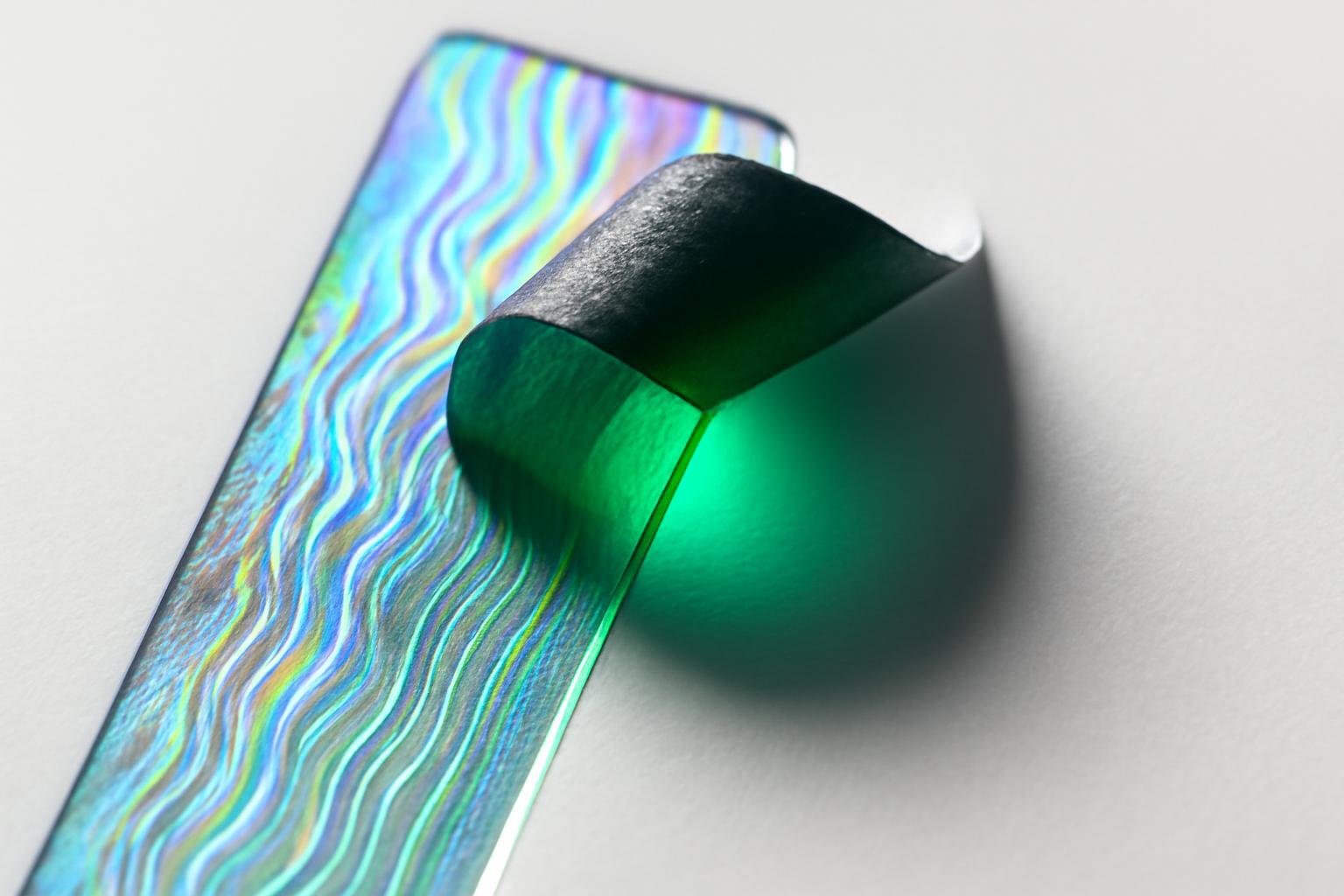
Holograms on packaging — the oldest and weakest method: they have been learned to copy almost simultaneously with their invention. The modern set of tools looks different.
- The 'Honest Mark' system — mandatory digital marking for certain categories (footwear, perfumery, specific items of light industry), each unit receives a unique code that is scanned at every stage of the supply chain.
- QR codes linked to the manufacturer's server — the buyer scans the code and receives authenticity confirmation directly from the brand's website, not from the packaging itself, which is easy to fake.
- RFID tags — are used in expensive product categories (electronics, luxury segment), allowing tracking of product physical movement and identifying 'duplicates' — batches with the same serial number at different sales points.
- Serial numbers with verification in the brand's personal account — a simple and inexpensive solution for mid-market businesses without million-dollar budgets for RFID.
Starting from 1 April 2026 year, marketplaces have been integrated with the information resources of Rospatent and have gained access to databases of trademarks, patents and industrial designs in real time, in order to check trademark rights in real time when uploading a product card. This is the first step towards automatic blocking of counterfeit goods before they reach the storefront, rather than after a complaint from the rights holder.
Legal basis: amounts and timeframes that actually influence the decision
Lawyers usually overload this topic with references to specific articles of the Civil Code of the Russian Federation. For a brand owner, the numbers and the logic of application are more important.
Compensation for trademark infringement currently reaches 5 million rubles, but from 2026 year the upper limit will increase to 10 million. Fines for the infringer are established by legislation (KoAP RF and UG RF) depending on the type and scale of the infringement. Compensation in a civil suit may be calculated using several methods, including multiple indicators, which makes large-scale infringers more vulnerable: the greater the volume of counterfeit sales, the higher the absolute amount of the fine.
Registration of a trademark in the TRIOIS registry (customs registry of intellectual property objects) is free of charge and valid for up to three years with the possibility of renewal. This gives customs authorities the legal right to seize counterfeit shipments at the border without a separate court decision for each case. For a brand that imports or exports goods, this is barely the cheapest and most effective protection tool among all available.
How much brand protection really costs — and where you can save
Here begins the gap that lawyers rarely close: the real economics of the issue for medium business, not for a corporation with a legal department.
| Expense item | Cost | Comment |
|---|---|---|
| Registration in TROIIS | 0 rubles | Free, but requires an already registered trademark |
| Monitoring marketplaces | from 15–50 thousand rubles/month | Services for tracking product cards, automatic complaints |
| Legal services, first instance | 100–200 thousand rubles | Plus state fee 6000 rubles |
| Appeal and cassation | +50–150 thousand rubles per instance | Not always needed — many cases end at the first instance |
| Technological protection (QR/serial numbers) | from 50 thousand rubles for implementation | One-time setup + minimal costs for code generation |
The key mistake of a middle-sized brand is to immediately rush to court. A court process with real expenses in 150–300 thousand rubles only pays off in case of a large single violation with proven damage. For small and multiple violations — a typical situation on marketplaces — this path economically makes no sense.
A practical protection system without million-dollar lawsuits
A working model for a middle-sized brand is built by priority — from cheap and fast to expensive and slow:
- Register a trademark and immediately file an application in TRoIS — free of charge, provides protection at the border.
- Set up monitoring of product listings on major marketplaces — complaints are reviewed faster there than in court, and the platform blocks the seller if rights are confirmed with documents.
- Implement a simple technical protection — unique serial numbers with verification on the brand's website, this is cheaper than RFID and solves the problem of customer deception, which affects 43% of counterfeit cases.
- Keep a pre-litigation claim as a standard first step against systematic violators — often the seller prefers to negotiate rather than take the case to court with compensation in millions of rubles.
- Litigate selectively — only against major violators with proven sales volume, where potential compensation (up to 10 million rubles from 2026 year) justifies the costs for lawyers.
Monitoring marketplaces in practice turns out to be more effective than courts not because courts don't work, but because speed decides everything: by the time a court case is going, a counterfeit seller has time to sell a batch and disappear. Blocking a product listing within a few days after a complaint prevents damage that a court simply wouldn't catch up with.
Recent articles








MegaFon, BMW, VTB and more 240+ companies. See how it looks in the showcase reel:


Our branding agency is approached to order:
Branding agency services












