Branding of voice assistants and smart speakers
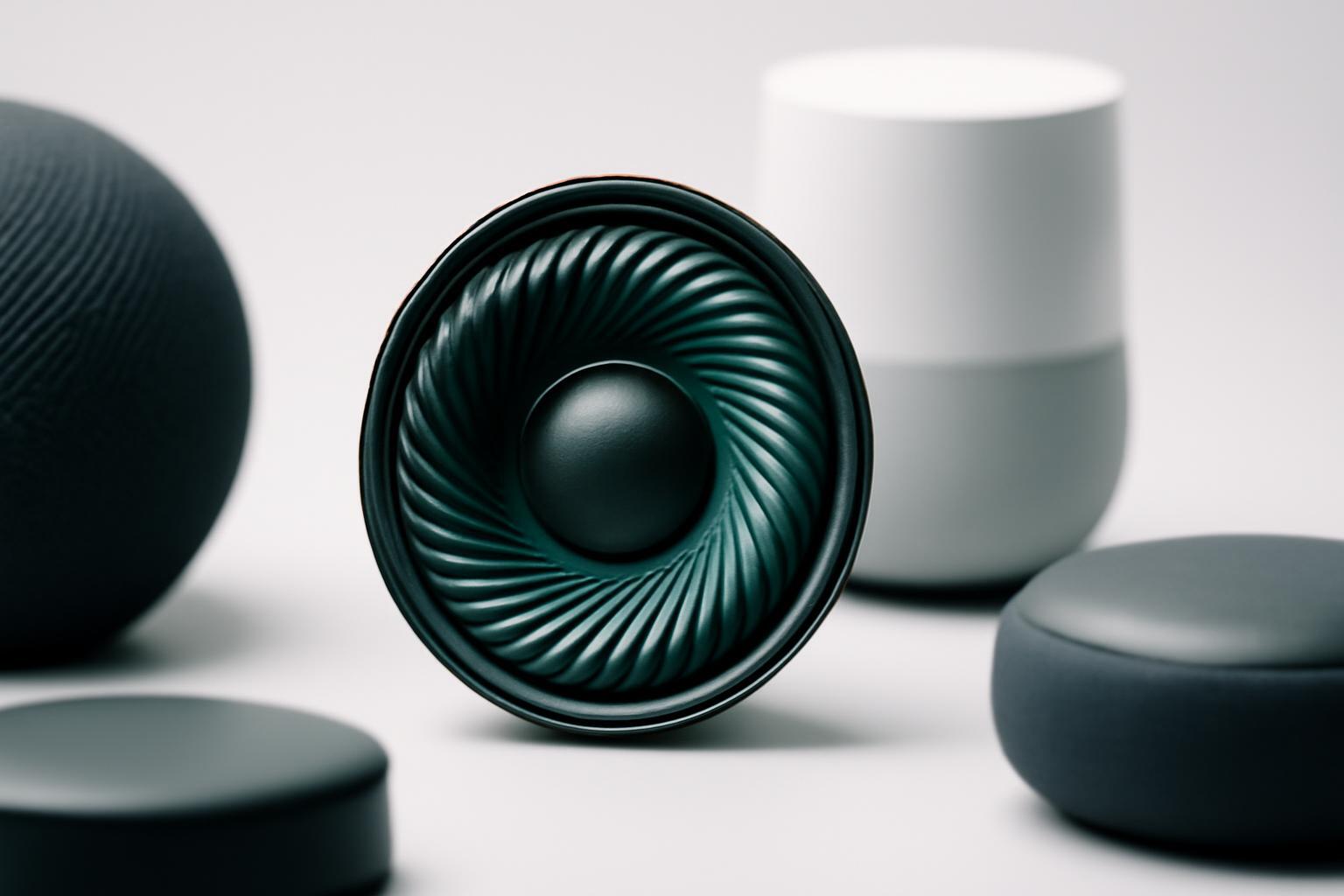
Voice instead of a logo: how assistant branding differs from conventional digital media
In visual marketing, a brand can be recognized in a fraction of a second by color and shape, even without reading the text. A voice interface has no such immediate cue — the user either hears the character or doesn't hear the brand at all. Hence the main difference: visual identity is primary on the web, and in voice environments it is at best secondary, because it is physically inaccessible at the moment of interaction.
Voice replaces the logo, color palette, and tone of voice of textual communications. Timbre, speech tempo, pauses, manner of constructing phrases — this is what forms the feeling of a 'own' or 'foreign' brand within the first 3-5 seconds of dialogue. If in web you can correct the impression with layout on the next screen, in the voice channel it is almost impossible to replay the first impression — there will be no second chance for a 'greeting sound'.
Character that is heard: how to define a brand's voice identity
Voice character is not 'picking a pleasant timbre from a catalog'. It is a separate document similar to a brand book, but instead of colors and fonts — sound and speech parameters.
| Parameter | What is recorded | How it is tested |
|---|---|---|
| Tone | Friendly / professional / playful / expert | A/B listening in focus groups with different scenarios (complaint, purchase, information) |
| Tempo | Number of words per minute, length of pauses | Measurement of auditory perception in noisy environments — kitchen, car, street |
| Lexicon | List of permitted and prohibited words, 'you/you' address forms | Testing on devices of different manufacturers, not just on your own stand |
| Emotions | Range of reactions: empathy, apology, joy | Testing scenarios with negative context (rejection, error, delay) |
The key practical mistake is testing voice only in ideal studio silence. Real users listen to speakers while the TV is on, children are playing, or there's noise from the street, and the brand's character must be perceived in those conditions. Without testing on real devices in various acoustic conditions, any, even expensive, voice work risks remaining beautiful but useless decoration.
How brands make money through smart speakers
Monetizing the voice channel is not an abstraction but a set of specific mechanisms, each with its own model for brand integration.
- Skills — a brand's own voice application within the platform ecosystem, from bank information to food delivery orders.
- Sponsored responses — the assistant recommends a brand in response to a neutral user query (e.g., "where to order pizza" → partner name).
- Voice payments — subscription, regular payment, and purchase processing via voice; this segment globally grows by more than 35% per year.
- Voice podcasts and audio content — branded audio formats embedded in media services of the ecosystem.
The difference between these tools is fundamental: a skill requires development and support, a sponsored response requires agreements with the platform and a budget for placement, and voice payments change the brand's role altogether — it becomes not an advertiser but a provider of financial services within another ecosystem.
A speaker as a gateway to an ecosystem, not a gadget
It's a mistake to think of a smart speaker as just another device, like a TV or smartphone. In fact, it's an entry point into an entire platform of services, and brands compete not for hardware but for a place in this chain. Yandex connects taxi, music, marketplace, and smart home with one voice request through Alice. Sber unifies media services, fintech, and e-commerce through Salut. VK builds its logic around social and media scenarios.
For brand positioning, this means one thing: it's not important to "be in the speaker," but to understand at what point in the user journey the ecosystem itself will lead the person to your category. A bank that was integrated into the "pay bill by voice" scenario gets a completely different visibility than one that simply recorded a jingle for an ad spot.
Alice, Salut, Marusya vs. Alexa and Siri: Different rules of the game
The Russian market follows its own rules, and directly transplanting Western case studies is a bad idea. According to M.Video data for the first quarter of 2026, almost 9 out of 10 smart speakers in Russia include Yandex Alice. At the same time, the market is clearly maturing: the share of models priced above 10 130 rubles rose from 23.9% to 30.4% over the year. This suggests that consumers are willing to pay for sound quality and deeper integration, rather than simply for the presence of a voice assistant.
| Criterion | Global platforms (Alexa, Google Assistant, Siri) | Local (Alice, Sber, Marusya) |
|---|---|---|
| Dominant player | Distributed between Amazon, Google, Apple | Alice occupies a near-monopolistic position (89%) |
| Brand integration model | Skills/Actions as separate applications | Skills plus deep integration with ecosystem services (taxi, delivery, fintech) |
| Entry threshold for small business | High due to English-language competition and certification standards | Lower due to local SDKs and Russian-language developer support |
| Voice monetization | Developed voice-commerce via Amazon Pay | Growing segment tied to banking ecosystems (Sber, Tinkoff) |
Practical conclusion: for a Russian brand, attempting to 'do what Alexa does' almost always makes no sense — here is another market structure, another dominant player, and another logic of integration into users' daily scenarios.
Voice strategy without a budget at Alpha-Bank: a path for small business
Most materials on this topic remain silent on the most pressing issue — what to do with a company that lacks resources for 50 hours of studio recording and its own assistant. The answer: do not build your own voice, but skillfully integrate into someone else's.
- Register a skill in the ecosystem (Alice, Marusya, Sber) for a specific narrow scenario — information, order entry, order status, without attempting to replace the entire website.
- Define a minimal voice style — 10-15 greeting, refusal, and confirmation phrases in a consistent tone, without actor recording, using the platform's standard TTS voice with configured intonation parameters.
- Negotiate placement in sponsored responses to relevant household queries in your niche — this is cheaper than developing a full-fledged skill.
- Test the scenario with 3-5 live users with different devices and in noisy environments, not just in the office on your own smartphone.
- Measure conversion through the voice channel within the first month and decide whether it's worth delving into optimization and paid integrations.
This path does not provide a unique brand voice, but it does give audience presence in voice scenarios — and for small business and B2B-company startups, this is much more important than an impressive, yet unjustifiably expensive audio brand book.
How to understand that voice branding works, not just exists
The problem with the voice channel is that click and view metrics don't work at all here — they simply don't exist. Evaluation must be based on other indicators, and most companies don't even count them, limiting themselves to the fact that 'the skill is launched'.
Recent articles







MegaFon, BMW, VTB and more 240+ companies. See how it looks in the showcase reel:


Our branding agency is approached to order:
Branding agency services












