Custom brand font: when and why to order development
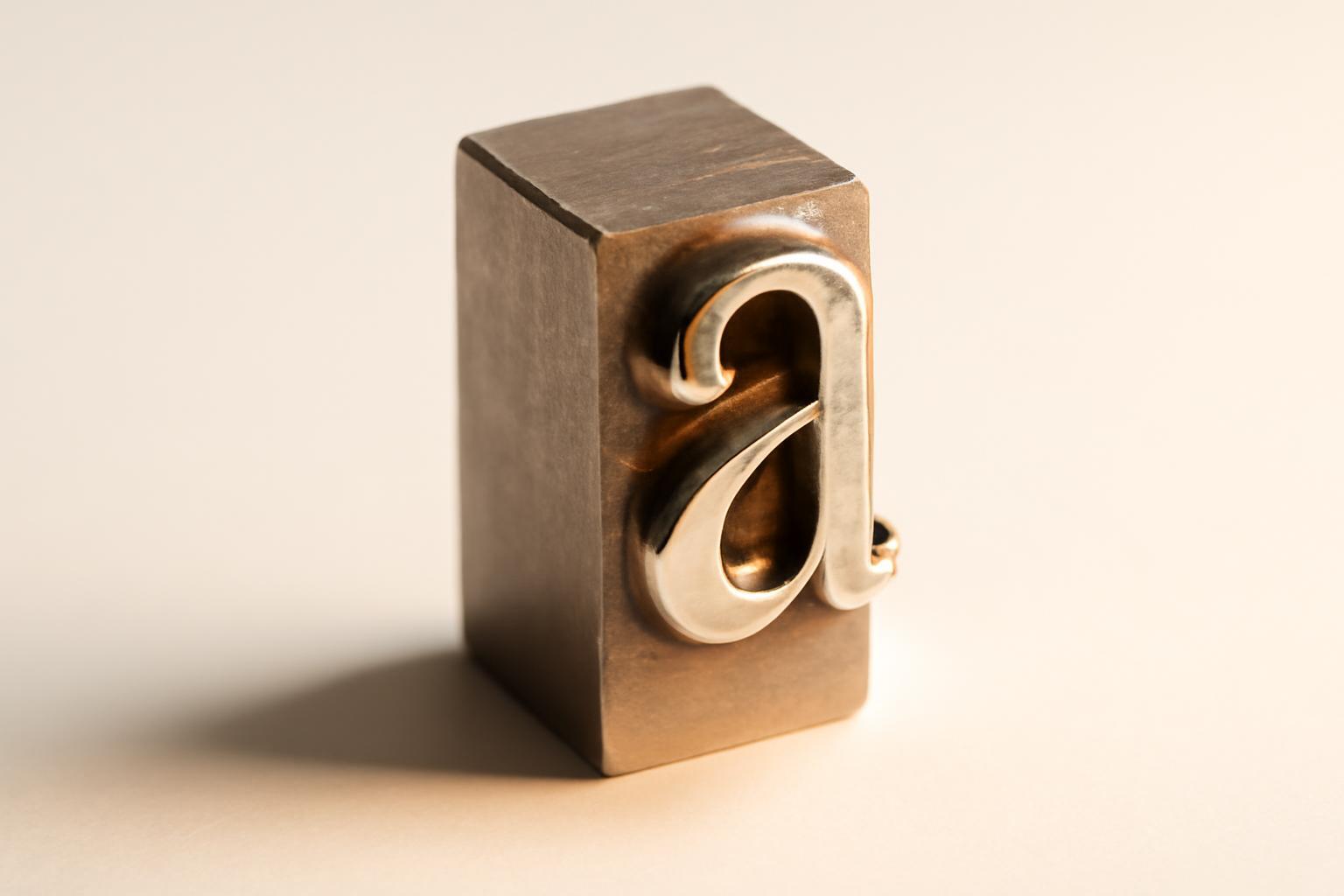
What companies face when the question of font arises
Usually, the topic of custom typography emerges not abstractly, but at the moment of a specific pain point. Either a designer at the next rebranding shows a moodboard with the phrase "let's order our own font, that's so cool," or a lawyer reminds that the license for the current family is expiring and renewal has tripled in price. Netflix found itself in exactly such a situation: the company was paying millions of dollars per year for the Gotham license and at some point decided it was cheaper and more beneficial for the brand to make its own Netflix Sans. Coca-Cola took a different path — it managed without custom fonts for 130 years and only ordered TCCC Unity when the number of media and languages became unmanageable without a single font standard.
These two cases set the right question: not "is it prestigious to have your own font," but "what is the cost to the company of not having its own font right now."
At what scale does custom font actually pay off
There is no universal threshold based on the number of employees — the economy is measured not by headcount, but by the volume of typographic load on the brand. In practice, it makes sense to consider three parameters simultaneously.
- The horizon of use — the company plans not to change the identification system for at least 6-10 years. Font development is a capital investment, not an operational expense, and it amortizes over the long term.
- The number of carriers and channels — starting from 10 and above: packaging, website, application, outdoor advertising, presentations, documents, social networks, store windows, transportation, merchandise. The wider the coverage, the more noticeable the savings on licenses and the stronger the brand recognition effect.
- Multilingualism and character set volume — if a brand operates in multiple alphabets (Cyrillic plus Latin, and sometimes other writing systems), ready-made licenses almost always either do not cover the required languages, or cost as a separate development. Yandex made Yandex Sans 2,5 year precisely due to the multilingual and multi-platform task.
If at least one of the three parameters is underestimated — short horizon, three carriers, one language — ordering a font from scratch is premature. It is more reasonable to take a middle path.
Three paths: ready-made font, customization, or development from scratch
Between 'buy a license' and 'order a font from scratch' there is a middle option — customization of an existing typeface to meet the brand's tasks. It covers most real business requests of medium-sized companies.
| Path | When it fits | Timelines | Cost (benchmark) |
|---|---|---|---|
| Ready-made paid font | Brand is young, few carriers, usage horizon not defined | from one day | from 5 000 to 100 000 rub. per license |
| Customization of existing | A recognizable detail is needed (letter, symbol, style), but not a full-fledged system | several weeks | from 150 000 rub. |
| Development from scratch | A long horizon, many carriers, several languages, ambitions for scale | from 2 to 12 months | from 230 000 rub., full family — individually |
Customization — an underrated tool. Often it is enough to redraw a few signs, change the proportions of lowercase letters or add a unique ligature, to make a font 'one's own' without the cost of a full family of designs.
From which stages does the development consist and how long does it take
The process of developing a custom font is not a designer's creative outburst, but engineering work with a clear sequence.
- Brief and research. The studio studies the brand, competitors, carriers, language coverage. 1-2 weeks.
- Concept and sketches of key signs. Drawing 8-12 letters that define the character of the entire font — usually these are letters with the largest number of unique forms. 2-4 weeks.
- Development of a full alphabet of one style. Redrawing all letters, numbers, punctuation marks. One complex glyph may take up to an hour of a designer's work. 1-3 months.
- Kerning, interline spacing, testing in real layouts. Checking the font in typesetting, on screen, in print. 2-4 weeks.
- Family expansion (if multiple variants and Cyrillic+Latin are needed). Here, the timelines grow multiplicatively — it was exactly at this stage that TypeType spent 2900 hours on TT Neoris, working 2,5 years.
- Final testing and file packaging. Technical formats, hinting, documentation for use in a design system.
Final timelines: a logo font from several letters — several weeks; one variant with a basic character set — 2-4 months; a full family with Cyrillic and Latin — 6-12 months.
How much does it actually cost
The price is not based on 'brand magic', but on the labor costs for each glyph. The average rate on the market is 10-18 dollars per glyph, and with a full set of Cyrillic and Latin characters with diacritics, the count quickly exceeds hundreds of characters. In the Russian studio TypeType, the benchmarks are as follows: customization — from 150 000 rubles, development from scratch — from 230 000 rubles per one variant, and a full family with several weights is calculated individually and can cost several million rubles with a large language coverage.
The mistake many companies make is comparing this amount to the price of an annual license for a popular font and concluding 'it's expensive.' The comparison should be made with the total licensing payments for 6-10 years across all company brands and product lines — that's exactly how Netflix calculated it when deciding on Gotham.
What to ask a type designer before signing a brief
Negotiations with a studio are not about design approval, but a technical interview. It's worth asking at least these questions:
- How many variants will be included in the first iteration and what will be considered additional work?
- Who owns the rights to the final font — full transfer or a usage license?
- How will the font be tested on real brand carriers, and not just in the studio mockup?
- What is included in the technical packaging—web formats, hinting for small font sizes, support for variational axes?
- How will the font be supported after delivery—adding characters, new languages, fixing rendering bugs?
The absence of a clear answer to at least one of these points is a signal that you should speak with the contractor one more time before paying a deposit.
Recent articles


MegaFon, BMW, VTB and more 240+ companies. See how it looks in the showcase reel:


Our branding agency is approached to order:
Branding agency services












