Lamination and its types in packaging
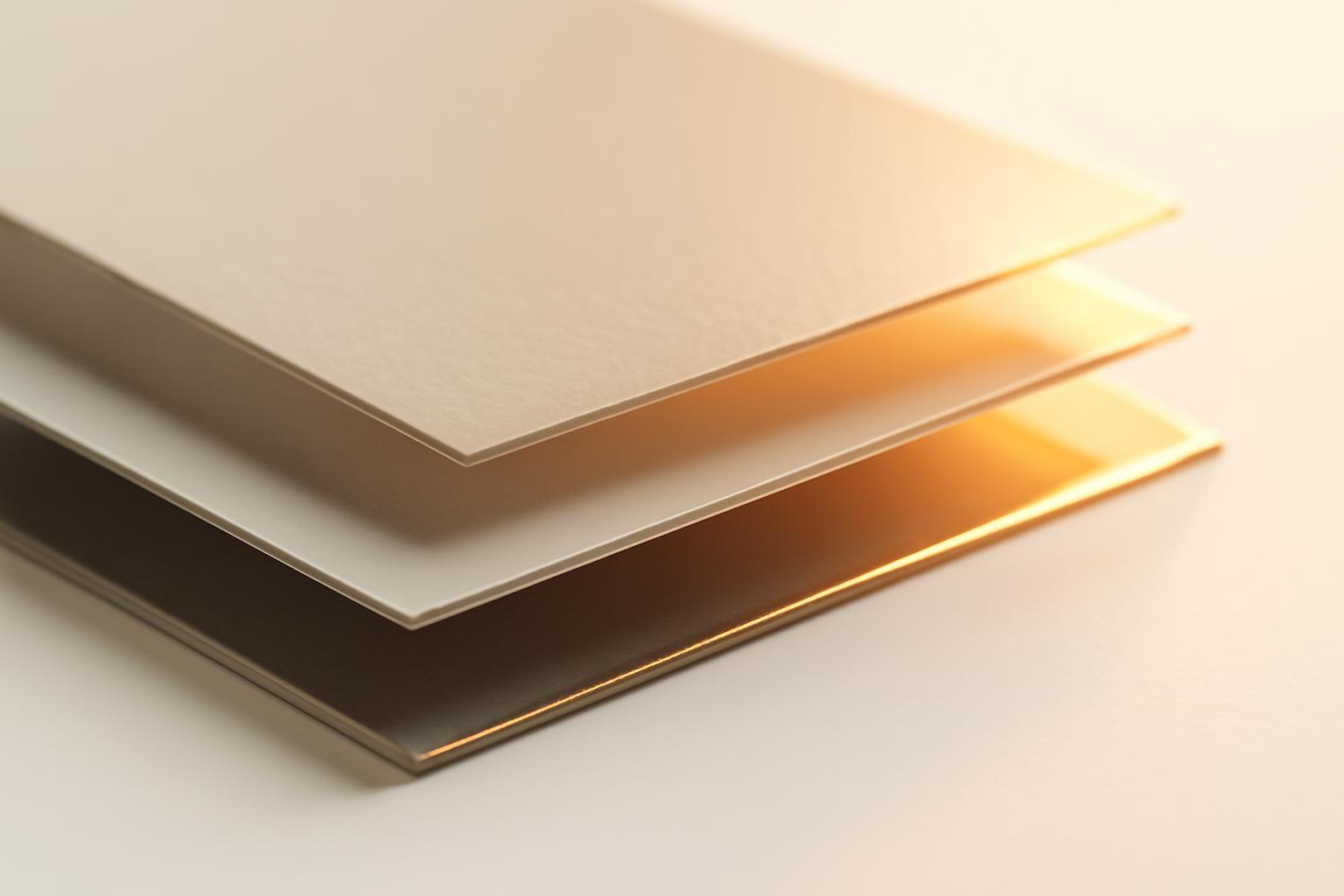
How to choose between dry, wet, and solvent-free lamination
Choosing the method is not a matter of designer's taste, but an engineering task with specific limitations regarding temperature, line speed, and product contact requirements. Dry lamination maintains the market due to low equipment costs and universality, but it is precisely this method that produces the highest solvent emissions. Solvent-free technology operates on a two-component adhesive at 40–50°C and requires up to 36 hours for full polymerization — this creates a logistical delay that not all productions are ready to build into their plans.
| Method | Speed | Temperature/Drying | When to choose |
|---|---|---|---|
| Dry | up to 500 m/min | solvent drying, fast cycle | non-food packaging, large runs, budget is limited |
| Wet | medium | adhesive is applied in liquid form, dries after pressing | porous/paper substrates, complex multi-layer constructions |
| Solvent-free | up to 500 m/min | 40–50°C, curing up to 36 hours | food contact, low emission requirements |
| Extrusion | medium-high | polymer melt, without separate drying | barrier multi-layer structures |
In practice, the decision is made based on three filters: whether the material comes into direct contact with the product, whether sterilization or retorting will be required, and how critical the speed of batch output is. Solvent-free lamination does not tolerate high temperatures during sterilization— if the packaging is planned for autoclaving, this should be checked during the testing stage, not after the line is launched.
Which method to choose for food packaging
For food, the choice is narrowed down to solvent-free lamination almost without alternatives — and here is why. When the laminated material contacts the product, the adhesive components are capable of migrating into the contents. Adhesive components are capable of migrating into the contents under certain packaging conditions. This is verified by tests for compliance with the EU 1935/2004 regulation. This is not an abstract threat 'somewhere in the lab' — this is a specific parameter that is verified by tests for compliance with the EU 1935/2004 regulation, and without such testing, supply to the food industry should not be coordinated at all.
What to do in practice:
- Request from the supplier of adhesive a migration test protocol, not a general certificate of 'food grade' quality.
- Take into account that when packaging hot or fatty products, migration is intensified — tests must be conducted under real operating conditions, not at room temperature.
- For containers with a long shelf life, choose solvent-free systems with confirmed inertness, even if this is more expensive at the procurement stage.
Eco-friendliness of laminated packaging — where marketing diverges from reality
Here we will have to disappoint those who use craft packaging with lamination and write on it "eco-friendly". Laminated cardboard is a composite: paper plus polymer film, glued together in such a way that separating them at a sorting facility is economically inefficient. When heated, the polyethylene foil in such a construction separates and rolls into granules, making it almost impossible to recycle the material into quality secondary raw material — the recycling becomes unprofitable, and the final product of low quality is not needed on the market. Packaging that visually looks like a "paper alternative to plastic" actually creates a material that does not decompose faster than regular polyethylene and cannot be physically recycled separately.
The industry acknowledges this and seeks a solution not in abandoning lamination, but in replacing films with biodegradable analogs. The industry is developing compostable alternatives based on biopolymers: such structures are designed to be compostable, without creating an inseparable composite. The problem is that such materials are practically unavailable in industrial volumes in Russia — most local manufacturers continue to work with standard PE and PP films, while compostable solutions are purchased individually for niche premium projects. If a brand truly wants to claim eco-friendliness, it must either build the import of such films into its budget or honestly refrain from using green formulations on packaging — there is no compromise 'somewhat eco-friendly' here.
Gloss versus matte lamination — a practical difference
The difference is not only in shine. Matte film costs 5% more than glossy film, but it noticeably better conceals wear during long-term storage and transportation — this is critical for the premium segment, where packaging stays on the shelf for months. Gloss provides more saturated color and contrast, but every fingerprint and micro-scratch on it is immediately visible.
A working technique rarely described in review articles: selective UV coating over matte lamination. The logo or key graphic element is covered with glossy coating, while the background remains matte — the difference in textures creates a visual accent without additional embossing or foiling. This is cheaper than foil and works on almost any run size.
What is lamination and how do the main technical methods work
Lamination is the process of joining two or more layers of material (usually paper, cardboard, or film) through a glue or polymer layer to achieve barrier, protective, or decorative properties that are not achievable by each material separately.
Dry lamination
Adhesive on solvent is applied to the film, the solvent evaporates in the drying chamber, then the film is pressed against the substrate with a hot roller. The method is fast and universal, but solvent drying is the source of the main emissions of volatile organic compounds.
Wet lamination
The adhesive is applied in a wet state and immediately pressed against the substrate, with drying occurring only after the layers are joined. It is primarily used for porous materials that readily absorb adhesive — paper, certain types of cardboard.
Solvent-free lamination
Two-component adhesive without solvent is applied at 40–50°C, with polymerization taking up to 36 hours. This method produces fewer adhesive emissions compared to dry lamination — precisely due to the absence of evaporating solvents, not because of a 'cleaner' adhesive composition. It is more expensive in terms of equipment and requires patience during the roll aging stage, but this is the price for food safety and ecological profile.
Extrusion lamination
Melted polymer is applied directly to the substrate via an extruder, bypassing a separate adhesive layer. It works well for barrier multi-layer structures but is poorly compatible with subsequent recycling — as are all composites in this category.
An important technical detail that affects packaging production: the thickness of the laminating film is usually maintained within the range of 25–32 microns. Increasing the thickness may seem like a logical solution to improve strength, but in practice it is almost always a mistake: film thicker than 32 microns adheres worse to complex folds of the package, increases the risk of delamination at corner seams, and significantly raises the cost per meter without noticeable protective benefits. If the product requires additional strength, it is better to change the cardboard density or the number of layers in the structure rather than the film thickness.
How to make a decision and avoid overpaying
You can put everything together in a short sequence of actions that should be followed during the technical specification stage, not after the run has already been ordered.
- Determine whether the packaging comes into direct contact with the product — if so, there are essentially no other options besides solventless lamination with a migration test protocol.
- Check if sterilization or autoclaving is required — this excludes some solventless systems and requires a separate test for thermal resistance.
- Evaluate the
Recent articles



MegaFon, BMW, VTB and more 240+ companies. See how it looks in the showcase reel:


Our branding agency is approached to order:
Branding agency services












