Checking a logo for uniqueness before registration
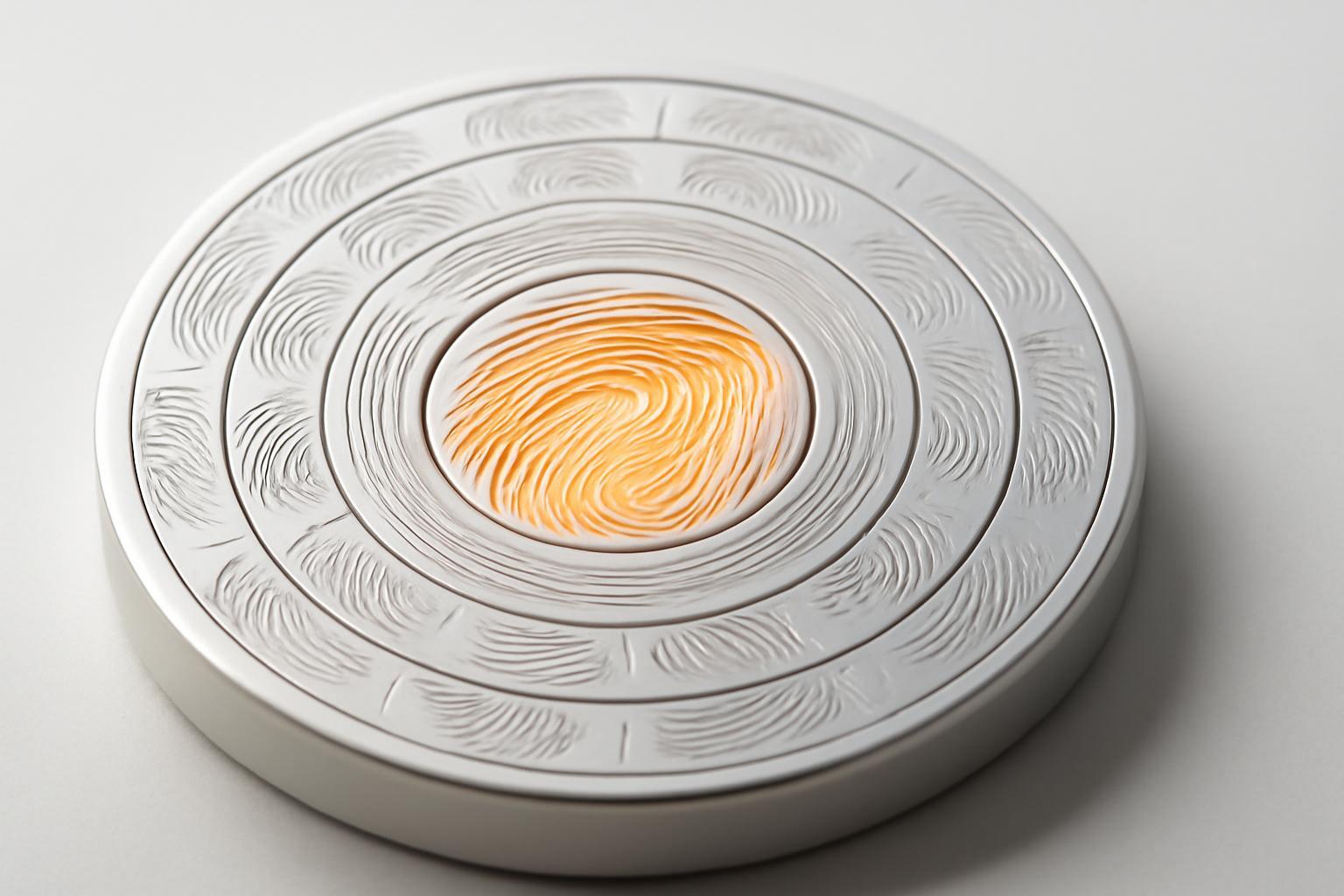
Why automatic logo search by image does not work
Technically, it is possible to recognize similar pictograms — for this, there exists the Vienna Classification of figurative elements of trademarks. It divides all graphic images into categories: geometric shapes, animals, plants, letters in stylization, and so on. Since 2023 year, a service has been operating on the Rospatent website where you can upload a file with a logo, and the system will return a list of visually similar signs with their status — registered, under examination, or protection terminated.
The problem is different: the service shows matches by form, but does not evaluate their legal significance. The system considers two circles with a wave inside similar regardless of whether they are registered in the "clothing" class or the "software" class — which are fundamentally different situations. Moreover, the algorithm does not distinguish which element in a composite mark is dominant, and does not take into account the phonetics of the verbal part. Therefore, the search results are raw data for further analysis, not a ready verdict. The patent attorney must interpret them, comparing the found analogs with the actual practice of Rospatent.
Three criteria of similarity and analysis of a real case
Similarity up to the degree of confusion is not about "looking alike at first glance," but about a formal evaluation method established in Rospatent rules. Experts assess the marks based on three criteria:
- Phonetic — the sound of the word, number of syllables, stress, root similarity;
- Graphic — font, composition, color scheme, overall visual impression;
- Semantic — the semantic meaning of the word or image, associations they evoke.
The key nuance that almost everyone misses when checking a logo on their own: it's enough for just one criterion out of three to match for Rospatent to recognize the signs as similar to the degree of confusion. It's not necessary for all parameters to match at once.
Let's examine a typical case. A company wants to register the name 'Moloko' (Milk) for a line of dairy products. The refusal in this case is guaranteed, but not due to a conflict with another brand, but based on an absolute ground — lack of distinctive character. The word directly describes the product, and Rospatent will not grant a monopoly on a widely used term. This is a separate category of problems that is often confused with relative similarity: in one case, a conflict with an already existing sign, in the other — the sign itself is initially unprotectable.
Errors in self-checking and forgotten databases
Companies that check logos on their own usually limit themselves to one registry — most often the FIPS website — and consider the matter closed. This is a fatal error if the business plans to expand beyond Russia or work with international partners.
| Database | What it covers | Feature |
|---|---|---|
| FIPS (fips.ru) | Russian Trademark Registry | Main registry, but without published applications in open search |
| TMview | European and some international signs | Aggregates data from dozens of national authorities |
| Madrid Monitor (WIPO) | 128 member countries of the Madrid System | Needed for international registration |
| TESS | USA | Required when entering the U.S. market |
| eSearch plus | European Union | EUIPO trademark search |
From the total number of records— and there are already over 1 million in the Russian Patent Registry— it is difficult to extract relevant matches without understanding the International Patent Classification (IPC) classes. Another common mistake: companies only look at the class in which they register themselves and do not check adjacent classes. A mark may be filed in class 25 (clothing), but conflict with a designation from class 35 (advertising, promotion of goods), if the goods and services are deemed homogeneous.
Why it is necessary to check pending applications, not only the registry
Free search on most sites, including FIPS, covers only already registered marks. Applications under examination are not visible in the open database — and it is precisely these that represent the main danger. In Russian law, priority is determined by the date of application submission, not the registration date. If a competitor filed documents for a similar mark a month earlier than you, they will gain priority, even if their mark has not yet passed examination and will not physically appear in the registry for another year.
Checking submitted applications independently is almost impossible — this information is closed until the moment of publication of registration details. Here, a patent agent with access to internal monitoring tools or paid services that track application movement before public indexing is needed.
If a conflicting mark is found: real ways out
Redesigning the logo is not the only scenario when a similar designation is discovered. There are three working alternatives that consultants often ignore, limiting themselves to reference information:
- Letter of consent from the owner. If the found mark is similar but not identical to yours, the owner may give written consent to register a similar designation. This significantly increases the chances of a positive expert opinion — Rospatent takes such consent into account as a significant factor, although it does not guarantee automatic approval.
- Early termination of protection due to non-use. If the conflicting mark has not been used by the owner for three consecutive years, its protection can be contested through a court of intellectual property rights and the path for your own registration can be cleared.
- Review of the list of UTI classes. Sometimes a conflict arises only in one or two classes from the complete list of the application. Narrowing the list of goods and services removes the overlap and eliminates the grounds for refusal without changing the logo itself.
Combined signs: when the graphic is more important than the text and vice versa
A separate complexity is the examination of designations that contain both text and an image. There is no universal rule here, and this is rarely explained clearly. If the verbal element is easily readable and memorable, experts usually recognize it as dominant — precisely by it that phonetic matches will be sought. But if the graphical component takes up a large part of the composition, and the text is small or decorative, the priority in assessing similarity shifts toward the image.
Practical conclusion: when checking a combined logo, one cannot limit oneself to searching by name or only by image. A separate analysis of both components is needed — and only then comparing with found analogs based on all three criteria at once, taking into account which element visually and semantically draws the consumer's attention.
Recent articles






MegaFon, BMW, VTB and more 240+ companies. See how it looks in the showcase reel:


Our branding agency is approached to order:
Branding agency services












