Brand Wheel (brand wheel): structure of the model
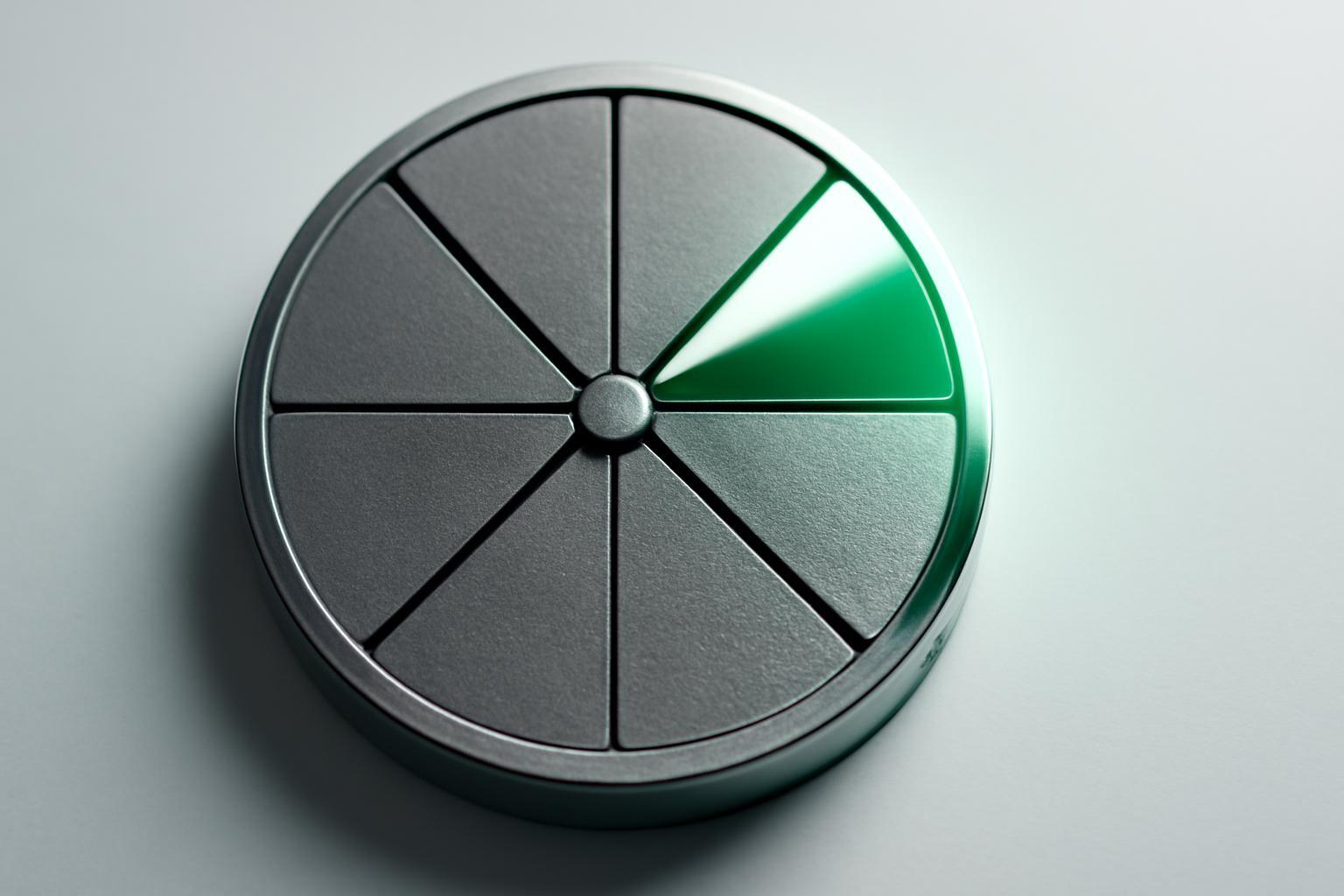
The classic Bates model: five layers with the essence at the center
The original structure was created by the Bates Worldwide team, and later it was thoroughly analyzed by David Aaker in the book "Building Strong Brands", after which the model became the de facto standard. The layers go from the outside to the inside: attributes — specific physical product characteristics; benefits — what the attributes provide functionally and emotionally to the consumer; values — beliefs that the brand conveys; individuality — the character of the brand, as if it were a person; and at the center is the essence — one phrase or word that explains why the brand exists. The essence works as a compass: Volvo uses "safety" so literally that it made the patent for the three-point seat belt freely available for use by other manufacturers, prioritizing public safety over commercial gain, and in 2020 limited the maximum speed of all new cars to 180 km/h — both decisions were driven by one word at the center of the wheel, not the marketing department.
Bates, Esch and Unilever — three different logics of construction
Here begins the divergence from what is usually written in articles about the Brand Wheel. The German researcher Franz-Rudolf Esh developed the Brand Steering Wheel with six components, separating rational and emotional attributes into distinct blocks — this is more convenient for B2B brands and industrial companies where rational argumentation weighs more than in the consumer sector. Unilever took a different path and created the Brand Key — a model without any rings or layers, built around the competitive environment, target audience, consumer insight and 'reason to believe', making it more suitable for launching a new product on a competitive market, rather than describing an existing brand.
| Model | Author / Company | Number of Elements | When to apply |
|---|---|---|---|
| Brand Wheel | Bates Worldwide, 1995 | 5 layers | Audit and description of an already formed brand |
| Brand Steering Wheel | Franz-Rudolf Esh | 6 components | B2B, industrial and complex technological brands |
| Brand Key | Unilever | 8+ blocks | Launching a new product on a competitive market |
Coleso, pyramid, prism: different tasks, not different names for the same thing
Brand Pyramid and Brand Prism are often confused with Brand Wheel, although they are tools for different scenarios. The pyramid is linear and hierarchical — it structures arguments from bottom to top, from attributes to essence, and is convenient as a logical chain for writing a brief for a copywriter. The Kapferer Prism adds a dimension not present in the wheel: it clearly separates the sender of the message (the brand's physicality, culture, self-presentation) and the receiver (reflexivity, mentality, relationships), which is critical for brands with strong symbolic value — fashion clothing, alcohol, premium-class cars. The wheel remains the only one of the three where the essence is literally placed in the center and surrounded by layers — this is visually convenient for team collaboration and strategic sessions, but it shows brand-audience interaction less effectively than the prism.
How to build a wheel from data, not from team opinions
A wheel invented during a brainstorm falls apart upon the first focus group check. The working sequence looks different:
- Collect quantitative data on brand perception — surveys, NPS, review analysis, and search queries.
- Conduct in-depth interviews with real customers, not company employees, to identify emotional benefits that are rarely articulated within the organization.
- Separately document competitor attributes to avoid attributing to the brand characteristics that are actually common to the category.
- Formulate the brand essence using the principle of 'from smaller to larger': first one word, then a sentence, then a paragraph, and then as if a book were being written about the brand. Each level should expand the previous one without contradictions.
- Test the resulting wheel with a focus group or through A/B testing of messages, rather than asserting it at the top-management level without feedback from the audience.
Mistakes that turn the wheel into a useless document
- The brand essence is formulated as a marketing slogan, not as an operational principle — then it does not help in making business decisions, as 'safety' does for Volvo.
- The core identity (2–4 unchanged parameters) is confused with the extended one — as a result, when entering a new market, the brand loses recognizability because it changes what should not be changed.
- Attributes and values are filled in based on the team's opinion without verification with the real audience.
- The wheel is created once and never reviewed, although the market and brand perception change.
- Brand individuality is described abstractly (e.g., 'reliable', 'modern') without specific behavioral manifestations.
Updating the wheel: current and desired state
When changing positioning or entering a new market, correctly build not one wheel, but two: current (how the brand looks now in the audience's eyes) and desired (how it should become). The gap between them is the content of the rebranding strategy. A telling example is the juice 'My Family': the change in positioning from a focus on creativity and humor to emphasizing family values coincided with the transition under Coca-Cola management and redefining the brand's position in the market, because the new essence better matched real purchase motivations, rather than what was interesting to the creative department.
After the updated Brand Wheel is approved, it must be immediately fixed in the brand book and guideline—otherwise, the strategic document will remain at the level of an idea. It is precisely the brand wheel that becomes the source for tone of voice, visual metaphors, and criteria for selecting advertising contractors: if the formulation in the brand book is not directly derived from the essence and values of the wheel, the document does not function as a system, but rather transforms into a set of fragmented rules.
Recent articles




MegaFon, BMW, VTB and more 240+ companies. See how it looks in the showcase reel:


Our branding agency is approached to order:
Branding agency services












