

What you get
Brand book — guidance for extending your Brisbane identity to new services. We define the shared elements, explain useful variations and show how names and layouts can work together across the agreed materials.
The development includes:
The development includes:
- Logo usage rules: versions, margins, minimum size, and prohibited changes.
- Corporate colours, typography, and graphic elements with examples of application.
- Approved media layouts and recommendations for designers, marketers, and contractors.
Using different versions of your logo on VK and your website can make the brand look inconsistent. A brand book keeps its presentation aligned.
As a brand grows, clear rules help keep it consistent. A brand book gives everyone a shared reference.
To preserve your identity
To present a professional image
Instead of explaining the typography rules each time, you can give designers a shared brand book.
To save time and effort
A recognisable, consistent brand can help build customer trust.
To build trust
Why does your brand need a brand book?
A brand book is useful for:
Events
Keep posters, tickets and social media stories part of one coherent identity.
Large companies
Keep the brand consistent across branches, cities and countries.
Startups
Present a clear, professional identity from the start.
Shops and restaurants
Give menus, signage and packaging a consistent look.
Who needs a brand book? Why it's not only for large companies

Logo and its usage
- How to use the logo (and how NOT to use it).
- Minimum size, clear space and prohibited changes.
Colour palette
- Main and additional colours.
- CMYK, RGB and Pantone specifications help reproduce colours consistently across print and digital formats.


Fonts
- Main and additional fonts.
- Sizes, spacing and usage rules.

Examples of application
- Business cards, stationery, packaging, social media, advertising.
Graphic elements
- Icons, patterns, textures.
- How and where to use them.


Tone of voice
- How should your brand sound: formal, friendly or bold?
- Examples of texts for different situations.
What's included in a brand book? Full breakdown
- A brand book brings together the brand's identity and rules for using its logo, colours, typefaces and tone of voice.
- Guidelines provide concise instructions, often for a particular product or application.
- A logo guide focuses on the logo, its approved versions and usage rules.
These terms can overlap. What matters is agreeing on the contents and applications your team needs.
How does a brand book differ from a guideline and a logo guide?

Product brand book
- How packaging, advertising, and social media will tell the story of the product.
- Example: Coca-Cola's distinctive red packaging.
Store brand book
- How to design displays, price tags, and packaging.
- Example: Apple's minimalist visual style.


Company brand book
- How the office, corporate documents, and presentations look.
- Example: Google's bright colour palette.
Event brand book
- How to design tickets, posters, and stories.
- Example: Coachella's distinctive festival identity.


Bar, café or restaurant brand book
- How to design the menu, signage, and uniforms.
- Example: Starbucks' recognisable visual identity.
Brand book for different purposes
Brand book cost
The price depends on the contents and applications required. Describe your project, and we will discuss the scope and budget.
Stages of brand book development
Research
- Analysis of target audience, competitors, and market.
- Definition of brand values.
Concept Development
- Developing a logo, colours and typefaces if these are included in the agreed scope.
- Defining the brand's tone of voice.
Creating Rules
- Description of all brand elements.
- Examples of application.
Testing
Checking how the brand book works in real life.
Finalisation
- Preparing the final version of the brand book.
- Delivery to the client in a convenient format (PDF, printed version).
We create practical guidelines your team can use every day.
Our approach:
Our approach:
- Deep analysis. We study your brand, competitors, and audience.
- Simplicity. We make the brand book understandable even for beginners.
- Practicality. We consider how the brand book will be used in real life.
Our approach to brand book development
Legal guarantees for your brand book

The contract sets out ownership, confidentiality and the terms for using your brand book.
Copyright:
Copyright:
- The contract specifies the rights transferred to you when the work is complete.
- We document the agreed ownership and usage rights.
- We do not disclose information about your project.
- All stages of work are protected by NDA (non-disclosure agreement).
- You can print and share the brand book within the usage rights agreed in the contract.
- No hidden restrictions or licensing fees.
- We can help with questions about applying the guidelines.
Examples of brand books
Problem
Solution
Business System Telecom established a design bureau to develop servers and motherboards. The company needed a refreshed brand and a consistent visual system for its business and products.
We needed to bring the brand's strategic foundation and visual identity into clear guidelines, so employees and suppliers could communicate consistently and apply the design across all touchpoints.
We needed to bring the brand's strategic foundation and visual identity into clear guidelines, so employees and suppliers could communicate consistently and apply the design across all touchpoints.
We refreshed the brand.
We developed a visual system and applied it across the agreed materials.
Everything is brought together in a clear guide that helps the company communicate consistently and build recognisable brand associations.
We developed a visual system and applied it across the agreed materials.
Everything is brought together in a clear guide that helps the company communicate consistently and build recognisable brand associations.
Profit increased by
+161 million ₽

Request
Solution
Russian airline Iraero asked us to define a clear market position.
Its competitive strengths were not clearly expressed, making it difficult to stand out.
Many employees had no direct contact with the leadership, and the company's values had not been clearly documented. As a result, employees communicated different messages, weakening consistency and trust.
Its competitive strengths were not clearly expressed, making it difficult to stand out.
Many employees had no direct contact with the leadership, and the company's values had not been clearly documented. As a result, employees communicated different messages, weakening consistency and trust.
Audience research helped us identify passengers' needs, expectations and concerns.
We identified a need for reassurance: passengers entrust their comfort and safety to the airline and rely on its care and expertise.
This insight formed the basis of the brand positioning and character: practicality, confidence, strength, and authority.
The brand values include care for the client, reliability, and attentiveness.
We documented the brand's strategic foundation in a platform that helps employees understand and communicate the company's values.
Working from the approved platform with lead art director Alexandra Korolkova, we refreshed the identity and developed custom lettering for the logo.
The visual identity is applied consistently across advertising and other touchpoints, supporting the brand's strategy.
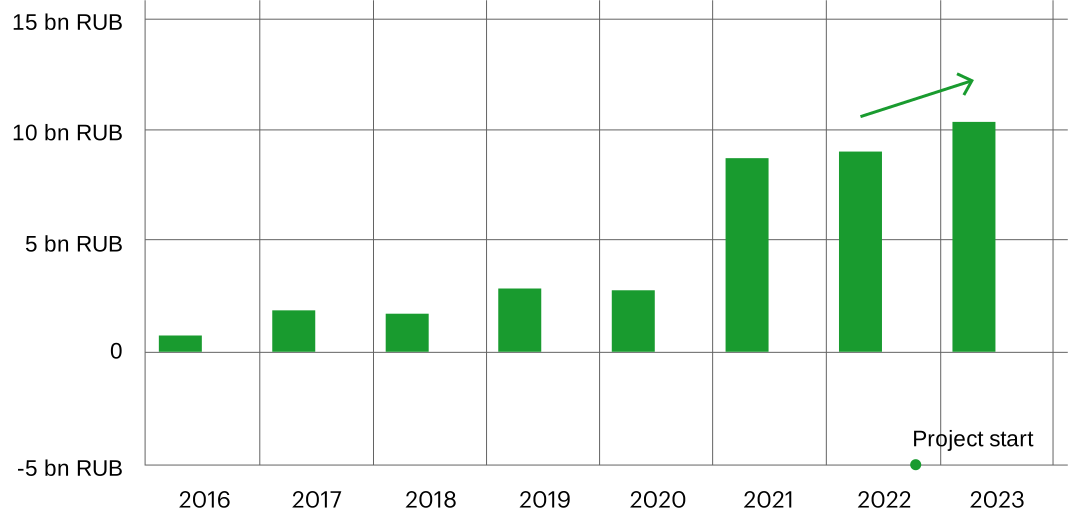
Profit increased by
+112 million ₽
Revenue increased by
+1.8 billion ₽
Let's discuss your project
Share your contact details and a brief description of the task. We will discuss the brand book's contents, project stages and timeline.


At first, I thought a brand book was unnecessary. But after seeing how all branches began to work in a unified style, I realised it was worth it. Now our brand is recognisable even by the colour of the cups.

Alexey, owner of a coffee chain
We worked with several agencies, but only here did they explain why a brand book is needed. Now we have clear rules, and designers no longer ask silly questions.
Marina, founder of a clothing brand
The brand book for our festival is fantastic. The posters, tickets and even the merchandise all look like part of one coherent concept. Thank you for your professionalism!
Igor, event organiser
Client reviews
Brand book — is not just a book you can put on a shelf. It is a tool that must work. Here's how to use it:
Introduce the team:
Introduce the team:
- Hold a meeting and explain why a brand book is needed.
- Distribute the PDF version to everyone working with the brand.
- Designers: refer to the brand book before creating layouts.
- Marketers: use the brand voice for posts and advertising.
- Managers: ensure all materials comply with the rules.
- If the brand evolves, the brand book should change too.
- Check once a year if the rules are still relevant.
- When a new situation calls for an exception, agree on it deliberately and update the guidance where needed.
Brand book usage guidelines

Helps your team understand what the brand should communicate and how people perceive it.
Brand Strategist
Designers
turn these ideas into a specific visual style — logo, colour palette, fonts, and other elements.
Copywriters
choose words that make your brand understandable and attractive to the audience.
Managers
keep the project on schedule and coordinate the work.
Marketers
help ensure that the brand book works for business growth and customer attraction. All of them work together to create a brand book that will work for your business.
Creating a brand book is always a team effort. Several specialists participate in the process, each responsible for their part.
Brand book development team
How we deliver your brand book

For print and digital sharing.
Brand book development timeline
Allow approximately 2–5 weeks. The schedule depends on the existing visual identity, the number of applications and the approval process. We confirm it after the briefing.
2–5 weeks
Frequently Asked Questions
Approximately 2–5 weeks. We confirm the exact timeline after the briefing.
Yes. Update the guidelines when the brand evolves or new applications need to be documented.
The logo is one part of the visual identity. A brand book explains how to use it consistently alongside the other elements.
Let's start with your task
Tell us what brand book you need. We will prepare a proposal for the scope of work and budget.
Additional services

Corporate identity development
A visual identity helps attract attention, build recognition and express the brand's character. Clear guidelines help your team work efficiently and reduce design and production costs.

Discuss branding
Discuss visual identity

Brand Platform
Helps build a brand that customers choose for years because they value it. The brand platform sets the strategic direction and defines the brand's key messages, philosophy and values.
Discuss brand strategy

Packaging Design
We design packaging that helps your product stand out and attract customers.
Discuss packaging


Positioning
We define your product's value, audience and competitive difference to establish a clear position in the market.
Discuss positioning
Websites on Tilda
We design Tilda websites around your business goals and audience, with a clear structure, distinctive visuals and an intuitive user experience.
Discuss a Tilda website

Naming
Logo
We develop a distinctive, memorable name that reflects your brand's character and creates the right associations.
A logo expresses your brand's identity.
Your logo helps shape the first impression of your company. We create a recognisable mark that attracts attention and communicates the brand's character.
Your logo helps shape the first impression of your company. We create a recognisable mark that attracts attention and communicates the brand's character.

Discuss naming
Discuss a logo
We create modern, user-friendly websites. A clear structure, considered design and useful content help build trust and make it easier for visitors to enquire or place an order.
Websites

Discuss a website
Presentations, books, catalogues and brochures
Design outsourcing
We design advertising materials that are engaging to read, handle and explore.
We combine clear messages with expressive visuals to engage your audience.
Work with a team of experienced designers across a range of industries. We bring a fresh perspective to your business, propose original ideas and turn them into practical designs.

Discuss a project
Websites
Discuss your project
We create modern, user-friendly websites. A clear structure, considered design and useful content help build trust and make it easier for visitors to enquire or place an order.
