Restyling and rebranding: what is the fundamental difference
Scale of changes: what is actually being redesigned
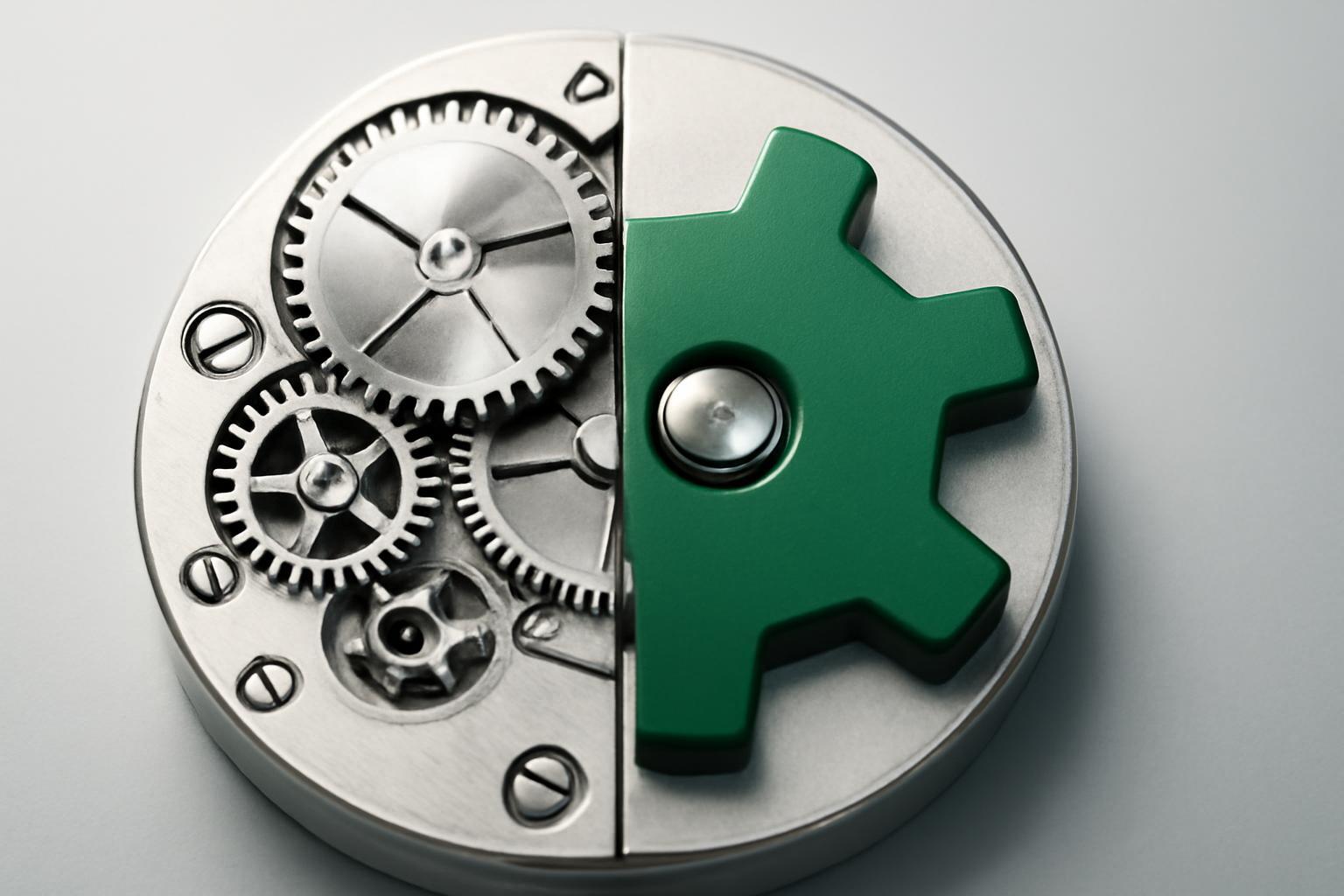
Restyling works with form. The brand's ideology, its promise to the client, target audience, and strategy remain the same — only the 'packaging' changes. This is a cosmetic operation: the logo becomes more modern, the palette becomes fresher, and typography becomes more readable. Rebranding works with content. It touches what the brand exists for: mission, values, sometimes the company name. The visual in rebranding almost always changes, but this is a consequence, not the goal.
The difference in risk reflects this logic. Restyling risks getting a lukewarm reaction like 'why change it, it was already okay' — unpleasant but not fatal. Rebranding risks losing part of the audience that followed the old name and old meanings, and there's no guarantee that the new audience will compensate for the loss.
| Parameter | Restyling | Rebranding |
|---|---|---|
| What changes | Logo, colors, fonts, patterns | Ideology, positioning, often the name |
| What remains | Positioning, values, audience | Sometimes only the legal entity is preserved |
| Implementation timeframe | 1–3 months | 6–18 months |
| Main risk | Legal (loss of trademark protection) | Loss of part of the old audience |
| Type of budget | Operating expenses | Strategic investment |
What problem each of the tools solves
Refreshment addresses visual fatigue when the product and reputation are in order, but the brand simply looks outdated against competitors. A good example is the Picnic chain: after changing packaging and logo to more modern colors, sales increased by 77%. No change in philosophy was required — customers simply began to notice the product on the shelf.
Rebranding is needed where the visual is not at fault. A classic case is the airline «Sibir» (Siberia), which suffered damage to its reputation after a series of aviation disasters. A new logo would not have helped here: the problem was one of trust, not design. The shift to the name S7 is an attempt not to repaint the facade, but to build a new reputation from scratch. Reskinning cannot wash away a brand's ruined history — for that, a complete identity change is needed.
Why rebranding requires a new language, while reskinning does not
The logo can be changed without telling the audience anything — simply, one day the signage will be different. Positioning does not work this way: if a company tells its clients that it is now about something else, it must explain why this is true, not just a new wrapper. Hence press releases, a new tone of communication, retraining the sales department to talk about the product differently.
Reskinning does not require this, because the brand's promise has not changed — the client does not need to rebuild their relationship with the company, only get used to the new look. A rebranding without changing communication becomes a fraud: the audience quickly recognizes that behind the pretty facade everything remains the same, and this undermines trust more than if nothing had been touched at all.
The hidden legal risk of reskinning
Hardly anyone writes about this, and they should. By decision of the Plenum of the Supreme Court of the Russian Federation No. 10 dated 23.04.2019, use of a trademark with modified elements may lead to premature termination of legal protection—if the court decides that the changes are substantial. That is, a company that thinks it has merely refreshed its logo risks legally 'losing' the old trademark and discovering that the new version is not protected at all. Before any update to a logo, even a small one, it is necessary to check whether the changes go beyond what the law considers 'the same designation'.
What happens if you choose the wrong tool
A mistake in tool selection hurts both recognizability and budget simultaneously.
- They did a restyling instead of a rebranding—audience sees the new packaging of an old problem and loses trust even faster because the solution looks like cosmetic camouflage.
- They did a full rebranding where styling would have been enough — spent many times more money and time, and part of the loyal audience still left, not understanding that the brand was essentially the same.
- They carried out a styling update without legal verification of the changes — risking to get a contested trademark registration at the most inopportune moment.
- They announced a rebranding but did not change the communication — the market considers this cosmetic, and the investment does not pay off.
Styling as part of a rebranding: not always separate processes
Styling can be a standalone decision, or it can become a step within a larger rebranding — there is no strict 'either-or' rule here. Often, large companies first visually update themselves, preparing the audience for deeper changes, and only then announce a change in positioning or name.
Tinkoff in 2024 year went through such an intermediate styling update before a full rebranding. The audience's reaction was ambiguous: the update was perceived not as a standalone step, but as a drawn-out 'prelude' to something bigger — and this created expectations that the company had to justify. A similar principle of phased logo updates without losing recognizability is demonstrated by the Semrush case, where the logo evolved throughout the company's history: each version became more modern, but retained key elements by which the audience recognized the brand.
From this practical conclusion: rebranding can and often should be encapsulated in a restyling, but the reverse is not true — restyling by itself does not become rebranding, even if it is done several times in a row. The brand ideology does not change from the number of design iterations.
How to understand what is needed specifically for you
- Check whether the brand's appearance is outdated, or whether trust in the product and its promise is suffering — the former is cured with restyling, the latter is not.
- Evaluate whether the audience or the market has changed enough so that the old positioning no longer reflects reality — this is a signal for rebranding.
- Check the legal cleanliness of the current trademark before making even minor visual changes.
- Determine whether the company is ready to change communication and explain to the market the reason for the changes — without this, a full rebranding is doomed to look like cosmetic work.
- Compare the budget and timelines: if the solution can be implemented within a few months without changing the essence of the brand, it is a refresh, not justification for a more expensive project.
Recent articles






MegaFon, BMW, VTB and more 240+ companies. See how it looks in the showcase reel:


Our branding agency is approached to order:
Branding agency services












