Legal check of the name before registration
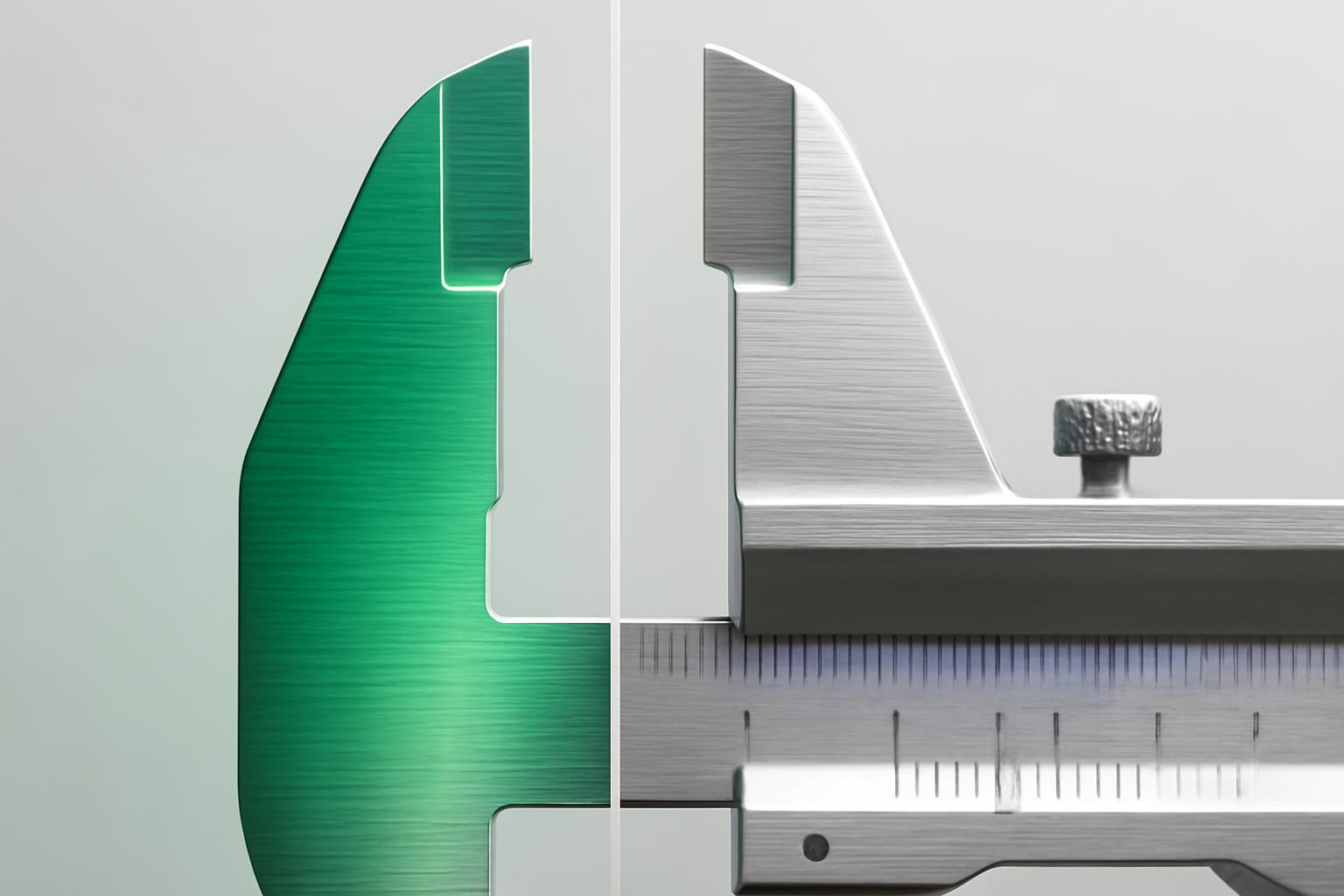
Two different laws — two different risks
The mistake is almost always one: an entrepreneur checks the name only in EGRUL and thinks that this covers the legal risk. In fact, the firm name of an OOO and a trademark are two independent systems of protection, and a match with one database does not protect against claims under the other.
The tax authority when registering an OOO only checks that the full firm name does not literally match an existing legal entity in EGRUL in the same region and with the same legal form. The trademark registry of the FNS does not check at all — it has no access to the Rospatent database, and this is not within its legal authority.
| Parameter | Firm name (EGRUL) | Trademark (Rospatent) |
|---|---|---|
| Who registers | FNS when creating an FNS | Rospatent, separate application |
| What It Protects | Legal entity name | Name of goods, services, logo |
| Check at submission | Only on literal match in the region | Expertise on similarity, up to 8-12 months |
| How to protect yourself when your rights are violated | Through the court, proving earlier registration | Through Rospatent and the court, with compensation |
| Who wins in case of a conflict | Who registered first in the EGRUL (art. 1474 of the Civil Code of the Russian Federation) | Who submitted the application first and received priority |
This leads to a practical conclusion: even if you did not check anyone before registering your LLC, but were first in the EGRUL with such a name and operate in the same field as the 'clone,' the law is on your side. However, this does not work with trademarks — the key factor here is not the date the company was created, but the date the application was submitted to Rospatent.
The blind spot: why 'clean now' does not mean 'clean in two weeks'
This is the moment that almost nobody explains to clients. When a company files a trademark application, it receives priority from the filing date—but the application is not published in open registries (for example, in RUTMAP) immediately, but rather after 15-16 working days. During this entire time, the application is already effective and already has legal priority, but it is not visible in the open database.
This is called a blind spot. Imagine: you checked the name 1 and found nothing. You filed an application on 2. But someone else filed an application for a similar name on 25 of last month, and it will only appear in the database a week after your filing. Formally, they have priority, although their application was not visible to anyone at the time of your check.
Free checks on the FIPS website and third-party services show only what has already been published. A paid one-time request (around 300 ₽ per one check from five available) provides a little more data, but it does not eliminate the blind spot—no service can physically scan 'invisible' applications. The only working tactic is to file an application as soon as possible after checking, rather than delaying registration for weeks, hoping that 'since we checked, it's safe.'
How an expert at Rospatent searches for similarity: the case of 'Svyazochka' versus 'Vyazanka'
Many are convinced that if a name does not literally match, but differs by a couple of letters or contains a prefix—it is already safe. This is a misconception that cost many companies a rebranding. A Rospatent expert evaluates similarity up to the degree of confusion based on three criteria simultaneously: phonetic (how it sounds), graphical (how it looks), and semantic (what it means).
A telling example is the case involving the trademarks «Link» and «Knit». At first glance, the words are different: no common root, different spelling. However, the Court of Intellectual Property Rights recognized them as similar to the degree of confusion. The reason is that both words evoke the same semantic association (a tie, a bundle of something), are close in sound, and are intended for similar goods. Simple visual difference proved insufficient to avoid conflict.
From this stems a rule worth remembering: replacing one letter, adding the prefixes "neo-", "mega-", or an ending does not save from rejection if, by meaning and sound, the name still associates with someone else's brand. Free automatic checkers do not conduct such analysis — they search for textual matches and at best transliteration, but do not evaluate semantic proximity the way a live expert does during application examination.
There is also the reverse side: two identical names can coexist peacefully if they operate in different classes of the Nice Classification and the products are not homogeneous. "Chamomile" as a cafe and "Chamomile" as an auto service do not intersect from the consumer's point of view, so there is no conflict. Homogeneity of goods and services is the key factor often ignored during self-checking.
Domains, marketplaces, social networks: where else do names get lost
Legal verification based on the databases of Rospatent and EGRUL is the necessary minimum, but not everything. The name needs to be checked in those environments where formally there are no such rights, but the actual presence of a competitor can lead to serious problems.
- Domains — if the desired name is already taken for a similar business, you will either have to buy the domain from the current owner or build the brand on an unclear address for clients;
- Marketplaces Ozon and Wildberries — if a product card with a similar name is already selling a similar product, the platform may block your product card based on a complaint or require proof of rights to the brand;
- Instagram and YouTube — a registered account with a similar name in your niche creates confusion for clients and complicates promotion, even if there is no legal conflict;
- Reviewers and aggregators — a name already associated with the negative reputation of another company — will be associated with you, even if these are different legal entities.
Formally, the lack of trademark registration by a competitor in social networks does not give them legal rights. But in practice, if they began publicly using a similar name earlier than you and can prove it, they gain an argument in a dispute over unfair competition or misleading the public. Checking the 'digital footprint' of a name before launch is part of legal hygiene, not just marketing convenience.
Absolute grounds for refusal that are skipped during self-audit
A separate category of risks — not a mismatch with other signs, but the wording of the name itself. Rospatent may refuse registration even for a unique, unoccupied name if it falls under the absolute grounds for refusal under article 1483 of the RF Civil Code.
- Descriptiveness — the name directly indicates the type of product or its properties (e.g., 'Fresh Bread' for bakery products), such terms are not considered original and are not subject to exclusive protection;
- Misleading consumers — for example, the word 'Milk' in a product name that actually contains no milk;
- Derivatives of state names — words like 'ros', 'russian', 'moscow' and similar require separate approval and almost always raise additional questions with the examination authority;
- Commonly accepted terms and symbols — names that have entered widespread use as designations for a specific type of goods.
The problem is that free check services search for matches with already registered signs, but do not evaluate the name based on these substantive criteria. A name may be absolutely unique and still be refused simply because it is too descriptive or contains a prohibited root.
What to do after checking: fixing the date and filing an application
Checking is only the first step, and it does not create any rights by itself. The right to a trademark arises not at the time of checking or at the time the name is invented, but at the time of filing an application with Rospatent — it is this date that determines priority in case of a dispute.
- Conduct a check against the EGRUL, Rospatent, domain, marketplace, and social media databases;
- Submit a trademark registration application as soon as possible after the check to minimize the risk of falling into the blind spot of another party's earlier application;
- Record the date of actual use of the name — a contract with a designer, the date of publication of the first post, the date of website launch, invoices for the first batch of goods;
- Keep all these documents separately — in case of a dispute, they will help prove prior, good-faith use of the brand, even if the trademark registration is not yet complete.
Compensation for infringement of another party's exclusive trademark rights — from 10 000 to 5 000 000 ₽, in practice courts often recover 300-500 thousand rubles, not to mention mandatory rebranding: changing the name, signs, packaging, domains, and accounts. A one-time check before registration costs several times less than these expenses, but by itself it is not protection — protection begins only after filing an application and documenting the facts of brand use.

Recent articles








MegaFon, BMW, VTB and more 240+ companies. See how it looks in the showcase reel:


Our branding agency is approached to order:
Branding agency services











