Morphological method of name generation
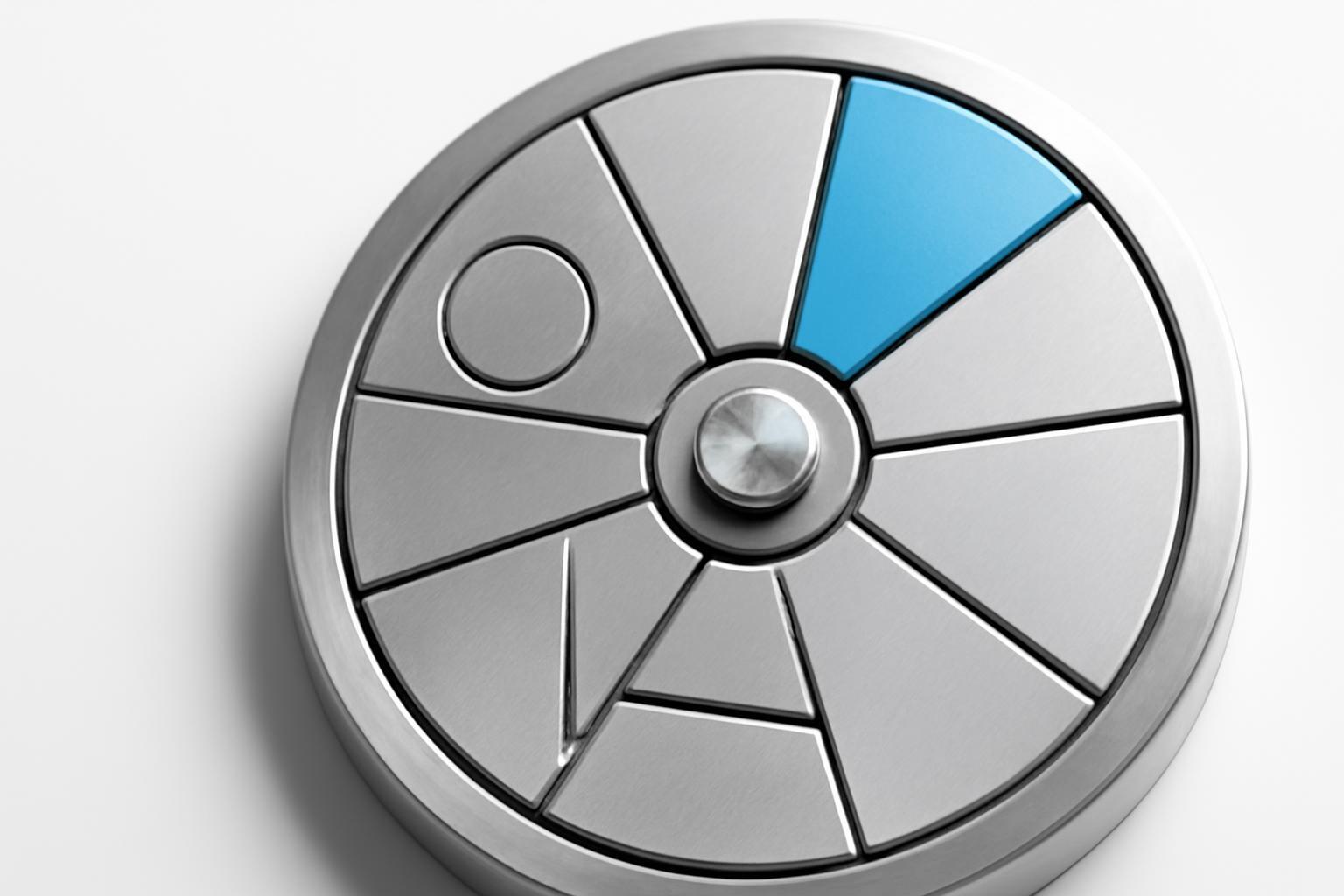
What people encounter when they hear about the 'morphological method'
The first reaction is confusion with morphology as a branch of linguistics. In fact, the method came from another area: it was developed by physicist Fritz Zwicky for rocket engine design, when it was necessary to go through all possible combinations of technical parameters. In 1960-style approach, it was adapted for creative tasks, and naming turned out to be one of the most grateful application areas — here too there is a final set of building blocks (roots, prefixes, suffixes, word parts) that can be combined according to a matrix.
In most articles on this topic, the morphological method is described as a classification — affixation, word compounding, abbreviation, telescoping, truncation. This is reference information, but it answers the question 'what is it,' not 'how to use it.' Next — about practice.
How to build a Zwicky matrix for a brand name
The essence of the method is to break the future name into semantic parameters, compile a list of options for each parameter, and then iterate through the intersections. This works as follows:
- Determine 3-5 key parameters of the name — for example, 'field of activity', 'brand emotion', 'sound anchor', 'formative element' (prefix, suffix, word part).
- For each parameter, write down 4-5 options. More is excessive: a 6x6 matrix produces thousands of combinations that cannot be manually evaluated in full. The optimal size is 4x4 or 5x5.
- Construct a table and fill in the intersection cells — through mechanical iteration, without censorship at this stage.
- Filter out obviously non-working combinations (hard to pronounce, evoke undesirable associations, occupied by competitors).
- Check the remaining 15-20 options against the criteria of pleasantness, legal clarity, and target audience perception.
Example of a matrix for a hypothetical food delivery brand: horizontal roots (e.g., «fresh», «go», «bite», «快» meaning «fast»), vertical formats (prefix «pro-», suffix «-ly», truncation to syllable, connecting vowel). Intersections yield options like Freshly, ProGo, Bitely — and it's already clear which ones are alive and which are dead.
How word compounding, blending, and affixation differ — and when to choose what
These are three different logics of word construction, and confusing them is a typical mistake of newcomers to naming.
| Method | How it works | Examples | When to choose |
|---|---|---|---|
| Word compounding (compounding) | Two whole words are joined without losing parts | Wikipedia, Facebook, Avito | When it's important to preserve readability of both root meanings — a complex service, B2B-segment |
| Blending | Words are «glued» together with loss of some letters at the junction | Nutella (Nut+ella), Spotify | When a short, resonant, easy-to-pronounce name is needed for a consumer brand |
| Affixation | A prefix or suffix is added to the root | Megabranding, Kodak-style neologisms | When a brand is built around one strong root and a scalable line is needed (suffix is easily changeable) |
The choice depends not on the trend of the method, but on the task. If the name should be immediately readable and explain the essence — choose compounding (word blending). If a short emotional form without direct decryption is needed — use telescoping. If a product line from one brand is planned — affixation provides flexibility through suffix changes.
Which method actually works most often
Here it makes sense to rely not on personal taste, but on statistics. An analysis of a thousand commercial names showed the following distribution: compounding (word blending) — 44%, coinage and acronyms — 26%, blend (telescoping) — 24%, standard derivation (classical affixation without distortions) — only 6%. The conclusion is simple: nearly three quarters of working names on the market are built using morphological methods, not invented 'from scratch' as completely new words. This is a mistake — to consider the morphological method a secondary tool; in practice, it is the main way brand names are created.
It is also worth noting that successful neyms often use diminutive-affectionate suffixes (e.g., «Kudryashka», «Lodochka») and pronouns to create an emotional connection with the audience (e.g., «Nash Dom», «Vash Vybor») — this is a morphological technique, albeit less obvious than telescoping.
How to check whether the generated name will be memorable to the audience
The matrix provides dozens of candidates, but without filtering, it is just a list of syllables. The verification process is structured in three layers:
- Phonetic test. Five to seven people unrelated to the project pronounce the name out loud. If at least two of them ask «how do you spell this?» — the word requires refinement.
- Associative test. The audience is asked what the sound associates with, before the brand’s field of activity is revealed. A match with the expected industry is a good sign.
- Memory test through intervals. They show a list of 8-10 names, then after 20 minutes ask the participants to recall them without hints. Morphological neyms with a recognizable root (as in word formation and affixation) usually recall better than pure telescoping without a referential meaning.
It is also important to conduct a legal check — through Rospatent and open domain registries; otherwise, the most successful option from the matrix may already be taken by a competitor before it is presented to the client.
Common mistakes when working with the morphological method
The first mistake is to make the matrix too large, driven by the desire to 'cover everything.' The result is hundreds of rows in the table that nobody can meaningfully evaluate, and the team ends up reverting to intuitive selection, thereby devaluing the very idea of the method. The second is to confuse the method with classification and stop at theory, without proceeding to actual combinatorial testing. The third is to ignore phonetic testing and launch a name that looks good on paper but stumbles in spoken form. The Zwicky matrix is a tool for generation, not a guarantee of a ready-made result: it narrows the search field, but the final decision still requires testing on real people.

Recent articles





MegaFon, BMW, VTB and more 240+ companies. See how it looks in the showcase reel:


Our branding agency is approached to order:
Branding agency services











