Packaging design: how to develop, how much it costs and trends 2026
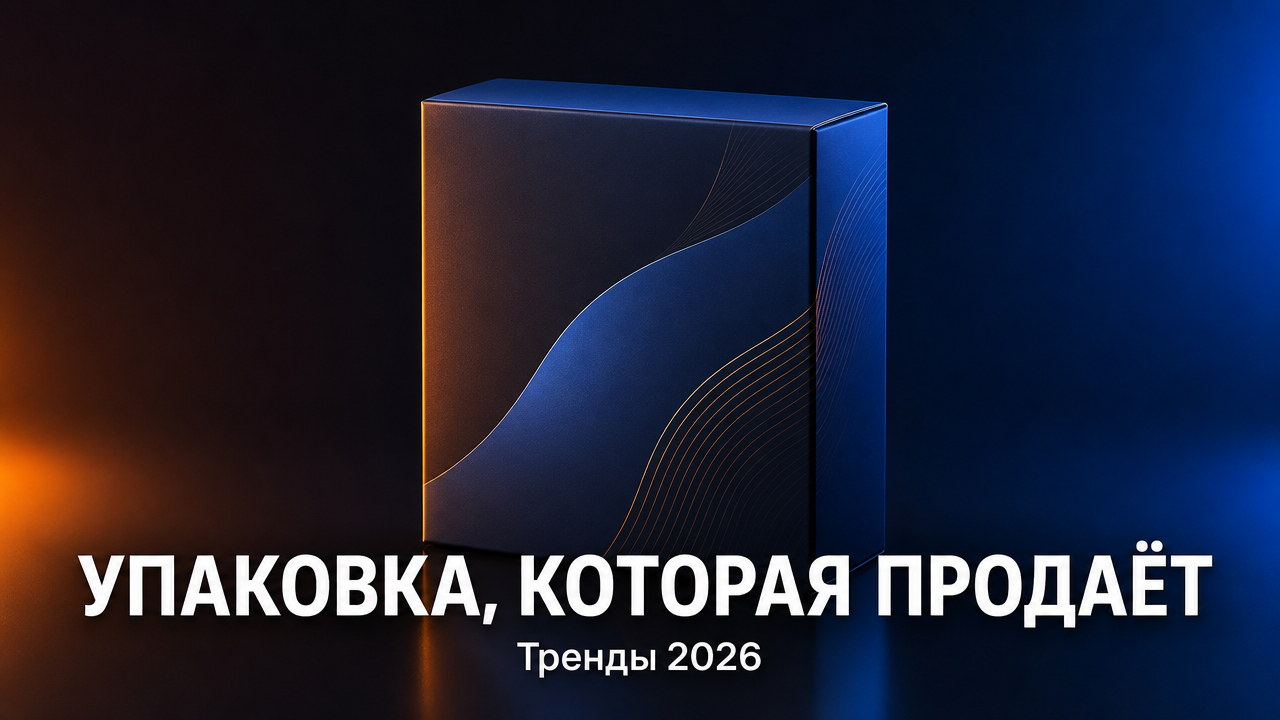
Packaging design is a sales tool, not just a product wrapper. The way a product looks on the shelf or in a marketplace listing affects brand recognition, conversion rate, and repeat purchases. The article covers the stages of packaging development, pricing factors, trends of 2026 year, and examples of how design helps business grow. We'll explore what to look for when ordering and which mistakes often cost more than the project itself.
Why packaging design is an investment, not an expense
Packaging is the first thing a buyer sees, even before reading the ingredients or comparing prices. It works as a silent salesperson: attracts attention, conveys brand values, and nudges the buyer toward making a purchase decision. A significant portion of purchasing decisions is formed precisely at this moment — at the shelf or while scrolling through listings on a marketplace. If packaging doesn't stand out among similar products in the category, the product remains unnoticed regardless of the quality of its contents. A good packaging design solves several business tasks at once: It increases shelf visibility — the product is found faster among dozens of similar items. It boosts conversion — the buyer chooses a familiar or visually convincing option. It builds loyalty — quality packaging is associated with quality contents, and this expectation needs to be fulfilled. It complicates copying — a unique solution is harder to counterfeit than a standard label. For a honey manufacturer, the agency Gromov Branding developed packaging that distinguished the product among dozens of competitors on the shelf. Handcrafted cardboard, minimalist design, and emphasis on the product's origin helped increase sales in retail chains. You can review this and other projects in the agency's portfolio.
Packaging Design Development Stages
Packaging development is a systemic process with several mandatory stages. Skipping any of them almost always reveals itself later: either the design fails to drive sales, or problems arise already at production, when it's too late and expensive to make changes. [H3] 1. Research The market, competitors, target audience, and sales channels are studied. In-depth interviews are conducted with potential buyers, their pains and expectations from the category are analyzed. It is also recorded where exactly the product will be sold — in offline retail, on marketplaces, or in both channels at the same time. This determines opposite design requirements: for shelf display, bright visibility from several meters away is important, while for an online product card, readability in a miniature size — the size of a postage stamp — is key. [H3] 2. Strategy Based on the research, brand positioning, USP, and archetype are defined. It is determined what emotion the packaging should evoke — trust, joy, premium quality, or eco-friendliness (and these are different, sometimes mutually exclusive design directions). The strategy sets the framework within which designers work further. [H3] 3. Design Concepts Designers develop 2–3 variants of the visual solution: logo, color palette, typography, patterns, and packaging shape. Each concept is accompanied by justification — why it fits the brand and its audience. At this stage, specifics of materials and printing technology are already taken into account, otherwise a beautiful image on the screen may turn out to be unfeasible in production. [H3] 4. Adaptation for Media Packaging rarely exists in a single format. Layouts are developed for all types of products: boxes, bags, labels, stickers, and shipping packaging.
How much does packaging design cost
The cost depends on the project complexity, number of carriers, depth of research, and agency level. The price range on the market is significant, so it's better to rely on order of magnitude rather than a specific amount. Market price range: Basic label design or simple box — from 50 000 to 150 000 rubles. Packaging development for a product line (3–5 items) — from 200 000 to 400 000 rubles. Comprehensive project with research, strategy, and adaptation for 10+ carriers — from 500 000 rubles. Please check the current price with the agency for a specific project — market figures have shifted notably over the past few years, and the final budget always depends on the volume of tasks. Typically included in the cost: market and audience analysis (customer development, competitive review); development of 2–3 design concepts; creation of a packaging brandbook with usage guidelines; adaptation for all necessary formats; preparation of print-ready layouts. Additional expenses may be required for trademark registration (packaging design can be protected as an industrial design). Printing a test run may also be needed. In Gromov Branding, the cost is calculated individually for each project — this allows taking into account the specifics of a particular business rather than fitting it into a standard price list. You can view examples of work and check the price on the packaging design service page. It's not advisable to cut corners on pre-print preparation. A mistake in color or misalignment can result in reprinting the entire run — which incurs costs that are multiple times higher than the savings made at the proof-checking stage.
Materials and eco-friendliness in packaging design
The choice of material directly affects brand perception, often at the level of subconscious associations. Cardboard is perceived as naturalness and eco-friendliness, glass as premium quality, plastic as practicality, and metal as durability. A sustainable trend of recent years has been eco-friendly packaging. Consumers are increasingly paying attention to recyclability, the reduction of excessive plastic use, and the application of secondary materials. The design should not only look attractive but also clearly communicate environmental consciousness—otherwise, this potential advantage may go unnoticed. When developing the packaging, it is important to consider: Color reproduction— the same color on different materials can look completely different, and this needs to be checked on real samples, not just on a computer screen. Texture— a matte or glossy surface changes the perception of the product, sometimes more strongly than the color palette itself. Post-printing possibilities— embossing, gravure, selective varnishing, and textured printing add tactile sensations and increase the perceived premium quality. The honey packaging from the agency's portfolio was made from craft cardboard with minimal use of inks and spot embossing. This emphasized the naturalness of the product and attracted an audience for whom eco-friendliness is a conscious choice criterion. At the same time, the design remained bright and memorable thanks to the contrasting label—minimalism did not result in invisibility.
Packaging design trends 2026
The packaging market is changing faster than it appears at first glance. Here are the directions that will define the category in the coming years. Minimalism and conciseness. The fewer details, the easier the product is perceived on the shelf within fractions of a second. Clean shapes, large typography, limited color palette. Bright accents and gradients. In contrast to minimalism — bold color solutions, neon shades, smooth transitions. Especially noticeable in the beverage and cosmetics categories, where emotion matters more than restraint. Tactile sensations. Consumers want not only to see but also to feel the packaging in their hands. Textured printing, soft touch effect, selective lacquer, crennelation — all of this creates pleasant physical sensations and increases the perceived value of the product. Personalization and limited editions. Packaging that changes depending on the season, region, or event attracts attention and stimulates repeat purchases. A classic example is limited edition holiday series that turns an ordinary product into a gift. Eco-friendly design. Not only recyclable materials, but also visual emphasis on eco-friendliness: labeling, muted natural colors, and the absence of plastic windows in boxes. Gromov Branding monitors these trends and applies them selectively, where they truly solve the brand's task, not just for the sake of a fashionable image. This approach allows creating packaging that remains relevant for more than one season.
How long does it take to develop packaging design? On average, from 2 to 6 weeks depending on complexity. A simple label — 2–3 weeks, a comprehensive project with research — up to 2 months. Is it necessary to register the packaging design as a trademark? Yes, this protects the design from being copied by competitors. Gromov Branding guarantees trademark registration: in case of refusal, the agency will develop a new logo at its own expense and pay for re-registration. What is the difference between packaging design for marketplaces and offline retail? For online channels, readability in thumbnail, contrasting colors, and large fonts are important. For shelf placement — visibility from a distance, tactile elements, and the ability to stand out among competitors in the same category. Can you order just the design without a brand book? Yes, but without a brand book, it is harder to maintain a consistent style when launching new products in the line. A reasonable minimum is at least a short guideline with rules for using key elements. How do you know if the packaging design is effective? By sales growth, increased brand recognition, positive customer feedback, and reduced advertising costs — ideally, the packaging starts selling itself without additional promotion. If the product needs to stand out on the shelf and generate more sales rather than blend in with competitors, it's worth starting with an audit of the current packaging. Specialists from Gromov Branding will conduct such an audit, suggest a strategy, and develop a design that works for the business, not just looks aesthetically pleasing. Call 8 800 200-84-50 or write to hello@gromovbranding.ru to discuss your project. Consultation is free. Branding results depend on many factors: product quality, marketing strategy, and sales channels.
MegaFon, BMW, VTB and more 240+ companies. See how it looks in the showcase reel:


Through interviews, surveys and workshops, our branding agency identifies the true needs of the business, motivations and pain points. Based on this data, we determine the tools that will effectively solve your brand's tasks.
Our branding agency is approached to order:
Our branding agency is approached to order:
Branding agency services












