Packaging design for food products: trends, requirements, examples
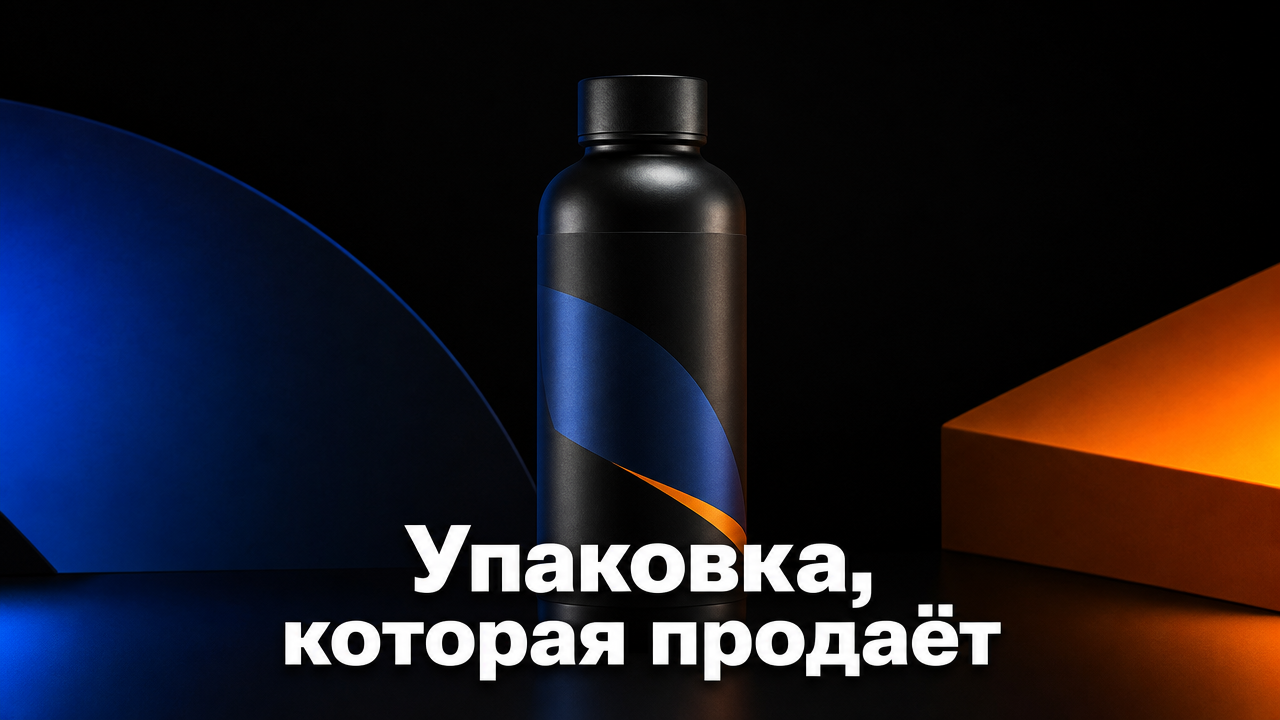
Food packaging is a complex product: it must comply with technical regulations, attract attention and build trust. In this article we analyze key requirements for labeling, popular materials, trends of 2025 year and show examples from the agency's portfolio Gromov Branding. At the end — practical recommendations for ordering design.
Why food packaging is a special challenge
Food packaging sits at the intersection of strict regulatory requirements, logistical constraints and marketing tasks. The manufacturer is required to indicate the composition, shelf life, storage conditions, nutritional values, GMO presence and the EAEU recycling symbol. A mistake in labeling can result in a fine for legal entities — up to substantial amounts under the Administrative Offenses Code, the exact amount depends on the nature of the violation and the court's decision. At the same time, packaging remains the main sales tool in retail: within a few seconds, a shopper decides whether to take the product or walk past it. In the practice of agency Gromov Branding, there are frequent cases when clients come with a ready-made product, but the packaging does not work: it does not meet regulations, gets lost among competitors or fails to convey brand values. A comprehensive approach — from audit of current packaging to development of new one taking all norms into account — helps avoid these problems and achieve measurable results from the start of sales. Based on the agency's experience, after redesigning packaging for one of its clients in the FMCG segment, sales in the retail network increased significantly, and material costs were reduced due to optimizing the construction — simply by removing an unnecessary layer of lamination that did not affect either product protection or its appearance. The complexity is also that packaging must be convenient for logistics: it should not deform during transport, occupy minimal space on the warehouse shelf and still maintain the product's visual appeal. Manufacturers often forget that design is not only aesthetics but also an engineering task. The agency with experience in 120+ projects, including food brands, knows how to combine all requirements into one solution.
Regulatory requirements for food packaging
Food product packaging design is regulated by three main Technical Regulations of the Customs Union: TR TS 005/2011 “On the Safety of Packaging” — establishes requirements for materials in contact with food. It defines which substances are permissible, how to conduct tests, and how to label the packaging itself. TR TS 022/2011 “Food Products in Terms of Their Labeling” — is the most important document for a designer. It specifies what must appear on the label: product name, composition, net weight, manufacturing date and shelf life, storage conditions, nutritional value (MAC), information on the presence of GMOs, and a unified mark for product placement on the EAEU market. TR TS 021/2011 “On the Safety of Food Products” — general requirements for production, storage, and circulation, which also affect packaging: for example, requirements for tightness. Additional rules apply to specific categories — alcohol, dietary supplements, infant nutrition, water — respectively. On alcoholic products, the alcohol content and warning about the dangers of excessive consumption must be indicated. A separate issue is the requirements for fonts. The font size must not be less than the minimum established level (for main text — usually 7–8 points, for warnings — larger), the text must be contrasted against the background and easily readable without effort. The placement of mandatory information is strictly regulated: it cannot be “hidden” on the side panel in small font or obscured by decorative elements.
Materials and Their Impact on Perception
The choice of packaging material depends on the product type, shelf life, sales channel, and budget. Kraft cardboard is associated with naturalness and handcraft, and is ideal for organic products and baked goods. Microfolia cardboard is used for transport packaging, while milled cardboard is used for premium boxes. The trend toward eco-friendliness is forcing manufacturers to reconsider materials: consumers are increasingly choosing packaging that can be recycled or made from secondary raw materials. There is a nuance that is often overlooked: eco-friendly packaging should not only look 'green,' but also meet all safety requirements. Kraft cardboard for fatty products requires special coating, otherwise it will soak up even on the shelf. The choice of material directly affects brand perception. Glossy plastic is associated with mass market and technology, matte glass with premium quality, and kraft with naturalness and handcraft. The packaging design should be coordinated with the material: it is difficult to convey subtle gradients on cardboard, and small text on film.
MaterialWhere it is appliedAdvantagesDisadvantagesCardboard and paperBaked goods, dry cereals, organic productsEco-friendliness, association with naturalnessRequires coating for fatty productsPlastic (PET, HDPE, PP)Sauces, beverages, semi-finished productsLightweight, durability, complex shapes, recyclableNegative perception by part of the audienceGlassSauces, oils, premium alcohol segmentPreserves taste and aroma, premium lookHeavy, fragile, expensive logisticsMetalCanned goods, beverages, infant nutritionLong shelf life, easy recyclingLimited design expressivenessBiodegradable filmsFresh products, snacksGrowing trend, eco-friendlinessCurrently more expensive than traditional materials
Packaging design trends 2025
The packaging market is rapidly changing. Here are the key directions to consider when developing packaging. - Minimalism and cleanliness. The consumer is tired of overloaded labels. The less text and more 'air' — the higher the chance that the product will be noticed on the shelf among dozens of competitors. The focus is on a large product image or key ingredient. The trend is especially strong in the premium segment: expensive oils, sauces, chocolate often look like works of art. - Infographics and transparency. The consumer wants to know what's inside the packaging, even before purchasing. Transparent inserts, ingredient schemes, icons like 'no sugar', 'non-GMO', 'vegan', 'gluten-free' build trust. Especially relevant for healthy food and functional products — protein bars, smoothies. - Emotional design. Illustrations, stories, tactile sensations — embossing, selective lacquering, creping — create a connection with the brand. Effective for products with a story: craft cheeses, homemade sauces, artisanal chocolate. Such packaging encourages social media photos and provides free coverage. - Personalization and limited editions. Packaging adapted for a season, holiday, or collaboration attracts attention and stimulates repeat purchases. Example — a New Year's series or a joint release with a famous chef. - Color trends. In 2025 year, natural shades were in fashion: terracotta, olive, mustard, deep blue. Bright neon colors moved to niche categories — energy drinks, snacks for youth.
Examples from practice: how packaging design influenced business
The portfolio Gromov Branding includes several notable projects in the food products category. Mekong is a delivery network for Vietnamese cuisine. The agency developed the brand identity and packaging design that distinguished the brand in a saturated delivery market. Bright colors, recognizable patterns, and convenient boxes made the Mekong order noticeable and memorable. After launching the new packaging, the company noted an increase in the number of repeat orders and average order value. Beesmark is a honey producer. The task was to increase the average order value and enter the premium segment. The dark-toned design with gold embossing and minimalist graphics created a sense of an elite product. After launching the new product line, sales in the premium channel increased, and the product began to be purchased by boutiques and hotels. Solo Karmen is a confectionery workshop. The dessert packaging was supposed to not only protect the product but also work as a social media content element. The agency developed a bright, photogenic design that customers began to post independently — this provided free coverage and increased brand recognition. The packaging was designed to minimize damage during delivery, which reduced the return rate. These examples show that properly designed packaging solves not only marketing but also operational tasks. The agency has experience in over 120 projects, including the FMCG segment, and knows how to find the balance between aesthetics, cost, and compliance with standards.
What laws regulate product packaging design? The main ones are TR TS 005/2011 (packaging safety), TR TS 022/2011 (labeling), TR TS 021/2011 (product safety). Additional regulations apply to specific product categories, such as alcohol and dietary supplements. Is it necessary to register a trademark for packaging? Yes, it protects your design from being copied by competitors. Gromov Branding guarantees trademark registration: in case of refusal, the agency will develop a new logo at its own expense and pay for registration. How much does packaging design development cost? The cost depends on the project complexity: the number of SKUs, the need for additional research, and implementation timelines. A precise estimate can be obtained after a briefing — the agency offers a free consultation. What materials are best for eco-friendly packaging? Cardboard, paper, glass, and biodegradable films are the most environmentally friendly options. The choice depends on the product: cardboard works well for powders, while glass or recyclable plastic is better for liquids. How to check if packaging design is effective? Conduct A/B testing at the point of sale or online. You can also evaluate shelf visibility using retail audit or focus groups. Can you order only packaging design without full branding? Yes, the agency develops packaging as a standalone project. However, it is often more effective to create it within the framework of overall branding so that all communication elements are coordinated — from the logo to the website. If you want your product's packaging to meet all requirements, stand out on the shelf, and generate profit, contact Gromov Branding.
MegaFon, BMW, VTB and more 240+ companies. See how it looks in the showcase reel:


Through interviews, surveys and workshops, our branding agency identifies the true needs of the business, motivations and pain points. Based on this data, we determine the tools that will effectively solve your brand's tasks.
Our branding agency is approached to order:
Our branding agency is approached to order:
Branding agency services












