Branding for a restaurant: from name to menu — how to create an atmosphere that people return for
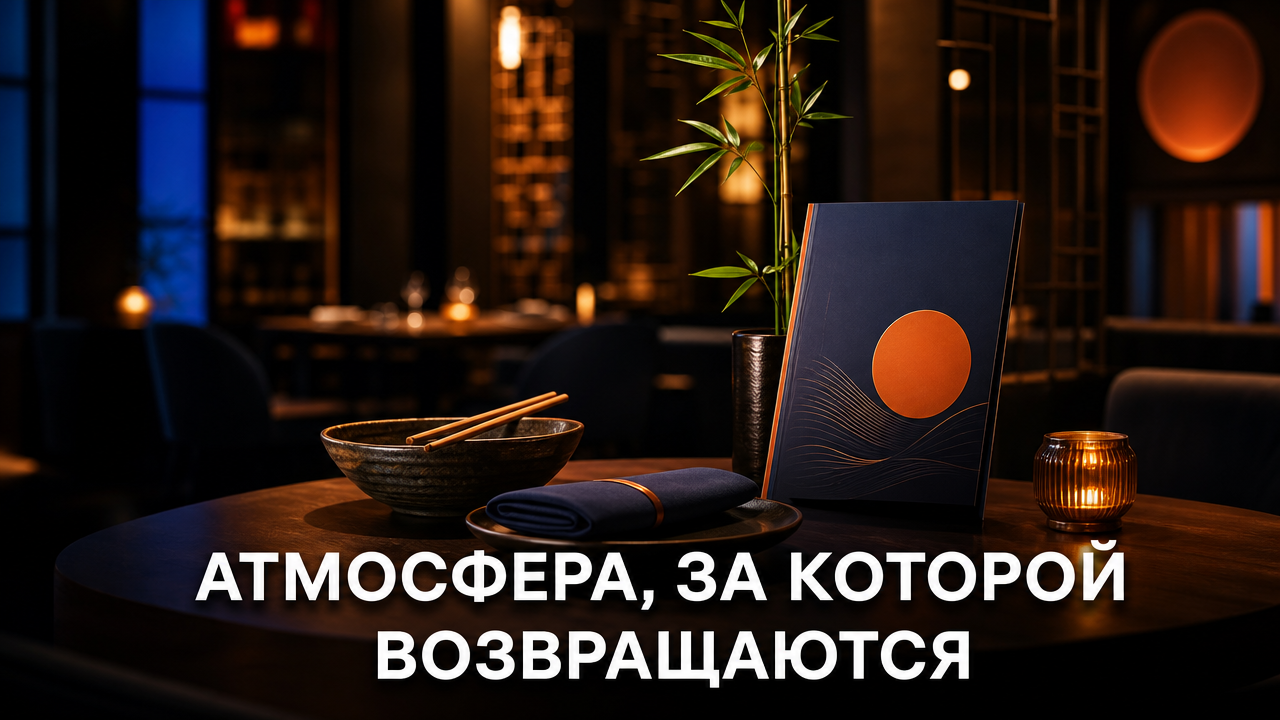
Restaurant branding is not just a logo and a beautiful menu, but a system that starts with naming and ends with delivery packaging. When every element works on one idea, guests don’t just come to eat — they return for the atmosphere. We break down the stages of restaurant branding, explain why it's important to register a trademark, and show how to measure the results. The foundation is the experience of the agency Gromov Branding, which has implemented projects for the food delivery chain Mekong and other brands.
Why restaurant branding doesn't start with a logo
Many restaurant owners are convinced that branding is a logo, a signboard, and a beautiful menu. In practice, it all starts earlier — with a brand platform. This is the foundation: mission, values, positioning, guest portrait. Without it, the logo remains just a picture that doesn't evoke emotions or is memorable. Two restaurants with the same cuisine and prices can live completely different lives. One is remembered, people tell their friends about it, and they return again. The other dissolves among dozens of similar establishments in the area. The difference is in the coherence of the impression. The brand platform defines how guests will feel in the establishment: comfortably, prestigefully, funnily, or, for example, a bit mysteriously. This choice also determines the interior, the style of dish presentation, and even the music in the hall. The brand platform includes market and audience analysis, competitive positioning, and the key message. Gromov Branding uses a speedrun methodology — accelerated strategy development focused on rapid implementation, which allows to go through the path from idea to ready layouts in 4–6 weeks. In the project for the food delivery chain Mekong, the brand platform became the basis for the name, visual style, and packaging: specialists conducted customer development and in-depth interviews to understand the needs of the target audience and find a position free from competitors.
Naming — a name that people remember
The name of the restaurant is the first point of contact with the guest. It should be memorable, associative, and, what is equally important, protectable. Otherwise, after a year you will find out that the name is already taken by another company, and you will have to change the sign, the menu, the website — and with them, lose money and the built-up recognizability. Criteria for a successful name: Ease of pronunciation — the guest should grasp at first hearing what the establishment is called and easily tell friends about it. Associativity — the name evokes the right images: cuisine, atmosphere, geography. Uniqueness — it can be registered as a trademark. Universality — it looks equally well on the sign, in the menu, on the website, and in the delivery app. Before choosing a name, the team conducts a patent search — checks the Rospatent database to see if the name is taken. Gromov Branding guarantees trademark registration: if Rospatent refuses, the agency develops a new logo at its own expense and pays for the re-registration. This removes the main legal risk from the restaurant owner. A telling example is the naming for Mekong. The name alludes to the Mekong River, associates with Asia, freshness, travel, is easy to remember, and registered without problems. A typical mistake in restaurant naming is complex or unpronounceable names that guests simply cannot repeat (in conversation with friends this is critical: if the name is forgotten, the establishment will not be recommended). Another extreme is names that say nothing about the concept. Good naming immediately gives an idea of what to expect from the establishment before the guest even sits down at the table.
Visual style: from interior to menu
When the name is approved, brand style development begins — not only the logo and color palette, but also a system that permeates all guest touchpoints. Interior. Colors, materials, lighting — everything is subordinated to the brand platform. For positioning a 'fast and affordable cafe,' a light, open space with simple furniture is suitable. For a premium-segment restaurant, dark tones, quality fabrics, and subdued lighting are appropriate. Menu. The main sales tool. Structure, fonts, accents on key dishes, photographs — all of this works to increase the average check. In restaurant branding, the menu is designed so that guests can quickly orient themselves and choose what is advantageous for the establishment. Usually, a modular system is used: dish categories are highlighted by color or icons, and typography helps find the right section in seconds. Signage and navigation. The first thing a potential guest sees. It should be readable from a distance, correspond to the overall style, and stand out among neighboring establishments. In the Mekong project, the identity is built on the contrast of green and white, with patterns reminiscent of rice fields and river waves. This visual code has been transferred to the website, packaging, and courier forms — thus, a holistic image is created. Brand patterns and icons are repeated in the menu, business cards, and social media. Such a system scales well: when opening new locations, it is sufficient to follow the brand book rules to maintain recognizability without losing quality.
Delivery packaging is a continuation of the brand
Delivery is one of the main channels for a restaurant today, and packaging in this channel works as a physical brand carrier that goes straight into the guest's hands. It should be recognizable, convenient, and evoke a desire to order again. The modular packaging system allows adapting the design for different dishes — pizza, sushi, soups, drinks — while the logo, colors, and fonts remain consistent. This increases brand recognition and trust. Functionality is also important: the packaging should maintain the dish's temperature, not leak, and be easy to use. Eco-friendly materials are another factor that today strengthens audience loyalty. The packaging design can be protected as part of a trademark — Gromov Branding includes registration as part of the service package, thus providing legal protection against copying by competitors. The packaging continues to work for the brand even after the guest has eaten: a beautiful bag or box is not thrown away immediately, but is photographed for social media or reused — and this is a form of free advertising.
How to measure the result of restaurant branding
Branding is an investment, not a one-time expense, and its effectiveness can be tracked through several metrics: Repeat visits — has the share of guests returning within a month increased? Average check — has it changed after menu and interior updates? Share of orders via branded search — how many people search for the restaurant by name rather than category? Recognizability — survey data, social media mentions, reviews. Conversion from delivery — how many new customers come after seeing packaging from friends. It's important to measure these indicators before starting work and again after 3–6 months following implementation — otherwise, there will be nothing to compare the effect against. Agency cases confirm: systematic branding delivers measurable business results. For example, for the freight transport company Swift, revenue growth amounted to 1,9 billion rubles, and margin — 160 million rubles. For the restaurant business, the metrics are different, but the principle is the same: a holistic brand pays for itself through increased loyalty and repeat orders. The Speedrun methodology Gromov Branding allows a refreshed brand to be launched quickly and start generating returns within a few weeks of launch.
How much does restaurant branding cost? The cost depends on the volume of work — from developing a name to a full brandbook with packaging. A precise estimate is compiled after the briefing. Why register a trademark? So that no one can use your name and visual style. Without registration, investments in the brand remain unprotected. How long does development take? The speed-run methodology allows completion within 4–6 weeks. The full cycle with a brandbook and packaging takes up to 3 months. What is included in the brand platform? Mission, values, positioning, target audience profile, brand archetype, key message, competitor analysis. Is a brandbook needed for a small cafe? Yes. A brandbook fixes the rules for using the style — this helps maintain consistency even with staff changes. How does branding affect delivery? Recognizable packaging increases loyalty, guests order again more often. Packaging design can also be protected as a trademark. What to do if the old brand is not working? Conduct an audit, and if it reveals systemic issues, then rebranding (sometimes a targeted redesign is sufficient). Gromov Branding helps diagnose weak points and offers a step-by-step plan for correction. Restaurant branding is a system that starts with an idea and ends with packaging in the guest's hands. When every element works toward one goal, the establishment becomes a place people want to return to. To discuss your project, call 8 800 200-84-50 or write to hello@gromovbranding.ru — specialists from Gromov Branding will provide detailed consultation and offer a solution tailored to your budget and timeline.
MegaFon, BMW, VTB and more 240+ companies. See how it looks in the showcase reel:


Through interviews, surveys and workshops, our branding agency identifies the true needs of the business, motivations and pain points. Based on this data, we determine the tools that will effectively solve your brand's tasks.
Our branding agency is approached to order:
Our branding agency is approached to order:
Branding agency services












